What the studies actually found
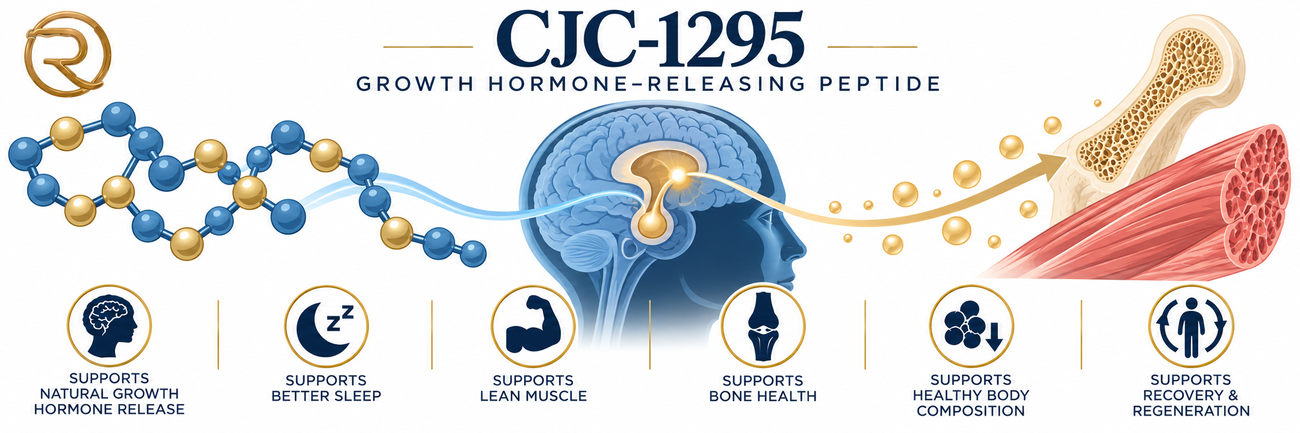
In a randomized, placebo-controlled trial, one subcutaneous dose produced dose-dependent GH increases of 2- to 10-fold lasting 6 or more days, and IGF-1 increases of 1.5- to 3-fold sustained for 9 to 11 days — remarkable duration from a single shot.
READ THE RESEARCH →A follow-up study found that even during sustained CJC-1295 exposure, GH was still released in the body's normal pulsed pattern rather than continuously — trough GH levels rose roughly 7.5-fold and 24-hour mean GH rose about 46%, but the underlying pulse rhythm stayed intact.
READ THE RESEARCH →The same trial found that moving from a single dose to weekly or biweekly dosing extended the IGF-1 elevation window to as long as 28 days — the entire point of the albumin-binding design researchers engineered into the molecule.
READ THE RESEARCH →A follow-up analysis of treated volunteers found measurable shifts across a panel of serum proteins beyond GH and IGF-1 themselves — a reminder that activating this axis has effects that ripple well past the two hormones usually measured.
READ THE RESEARCH →CJC-1295 is engineered to mimic GHRH, the upstream signal the hypothalamus itself uses to tell the pituitary to release GH — and its DAC modification lets it bind circulating albumin, turning a signal that normally lasts minutes into one that lasts days.
EXPLORE THE SCIENCE →CJC-1295 — Overview
What Is CJC-1295?
CJC-1295 is a synthetic analog of growth hormone-releasing hormone (GHRH), the naturally occurring peptide signal that helps the brain communicate with the pituitary gland to regulate growth hormone (GH) release. Rather than supplying GH directly, CJC-1295 was designed to extend and amplify one of the body’s own hormonal signals.
GH isn’t released continuously — the pituitary releases it in pulses that change throughout the day and night in response to the hypothalamus and other physiological factors, and GHRH is one of the principal signals promoting that release. CJC-1295 was developed around a straightforward question: could GHRH’s biological signal be made to last considerably longer without losing its ability to stimulate the growth-hormone system?
The answer is a modified form of the first 29 amino acids of human GHRH (GRF(1-29)). Researchers introduced several structural modifications and added a chemical group capable of binding the peptide to circulating albumin, a major blood protein — a feature known as the Drug Affinity Complex, or DAC. Once bound to albumin, the molecule remains in circulation far longer than native GHRH, whose natural activity is extremely short-lived. The result isn’t simply a stronger version of GHRH — it’s a deliberately engineered version designed to change the signal’s time scale, which is what made CJC-1295 scientifically interesting and led researchers to investigate whether prolonged GH/IGF-1 stimulation could have therapeutic applications.
It’s important to distinguish CJC-1295 from compounds sometimes marketed under similar names. CJC-1295 with DAC is the long-acting, albumin-binding molecule originally developed and clinically studied as CJC-1295. Shorter-acting compounds commonly sold as “CJC-1295 without DAC” or “modified GRF(1-29)” represent a different pharmacological concept and shouldn’t automatically be treated as interchangeable with the original long-acting candidate (see Science for why this distinction matters mechanistically).
Scientific Discovery & Development
The story begins decades before CJC-1295 existed. In the mid-20th century, scientists were realizing the brain directs distant endocrine organs through chemical signals, and Roger Guillemin and Andrew Schally independently pursued the elusive peptide hormones produced in the hypothalamus — establishing the existence and structures of several hypothalamic releasing hormones, work that earned them the 1977 Nobel Prize in Physiology or Medicine. Among their discoveries was growth hormone-releasing hormone (also called growth hormone-releasing factor), which gave scientists a way to stimulate the body’s own GH-producing cells rather than administering GH itself (the full discovery story is on the Research page).
Native GHRH is rapidly broken down in the body, making sustained therapeutic stimulation difficult, so researchers began exploring modified versions that could preserve activity while circulating longer. That effort led to work at ConjuChem, a biotechnology company in Montreal. In 2005, Lucie Jetté and colleagues described a series of modified human GHRH(1-29) compounds designed to create a longer-lasting signal; CJC-1295 stood out, retaining activity at the GHRH receptor while showing substantially greater stability and prolonged circulation, and producing far greater GH exposure than unmodified GHRH(1-29) in animal experiments.¹ The central innovation was the molecule’s ability to associate with albumin — abundant and long-lived — effectively using it as a circulating carrier so CJC-1295 could remain in circulation for days rather than behaving like a conventional short-lived peptide.
Human studies followed. In a randomized, placebo-controlled study published in 2006, Sam Teichman and colleagues examined CJC-1295 in healthy adults: a single administration produced dose-dependent GH increases, while IGF-1 — the principal endocrine mediator through which many GH effects are expressed — remained elevated far longer than expected from native GHRH. The estimated half-life of the long-acting compound was approximately 5.8 to 8.1 days.² This demonstrated something important: a short-lived hypothalamic signal could be transformed into a long-lasting pharmacological one.
Why Researchers Are Studying CJC-1295
The scientific interest comes primarily from its ability to influence the growth hormone–IGF-1 axis — one of the body’s major endocrine networks involved in growth, tissue maintenance, protein metabolism, bone biology, and energy regulation. At its simplest: the hypothalamus produces GHRH, which reaches the pituitary and stimulates somatotroph cells to release GH; GH then acts directly on tissues and stimulates IGF-1 production, particularly in the liver; IGF-1 subsequently signals throughout the body. CJC-1295 was designed to intervene near the beginning of this chain — scientifically different from administering GH itself, since the objective is to stimulate the body’s own GH-producing machinery rather than replace the hormone.
Researchers became interested in whether prolonged GHRH signaling could be useful where the GH/IGF-1 axis is impaired, or where modifying it could have therapeutic value. Early clinical investigations included adults with growth hormone deficiency and people with HIV-associated visceral obesity, reflecting interest in whether manipulating GH physiology could influence body composition and other metabolic characteristics — a Phase 2 trial sponsored by ConjuChem specifically investigated CJC-1295 in HIV-associated visceral obesity (see Research for how that trial concluded). The broader scientific question was larger than weight or muscle: whether a carefully engineered version of a natural endocrine signal could provide a sustained, controllable way to influence human physiology.
Biological Foundation
The hypothalamus acts partly as an endocrine control center; among its signals is GHRH, which travels to the pituitary and interacts with the GHRH receptor on somatotroph cells, telling the pituitary to release more GH. GH enters circulation and acts on multiple tissues, most importantly stimulating IGF-1 production — a second layer of signaling contributing to cellular growth, protein synthesis, bone and connective-tissue biology, and metabolism. The system is tightly regulated: GH secretion occurs in pulses, and negative feedback helps prevent uncontrolled hormonal activity.
CJC-1295 essentially introduces a longer-lasting version of the upstream GHRH signal. Human research demonstrated this doesn’t simply eliminate GH’s normal pulsatile character — in one study, GH secretion remained pulsatile following administration, while baseline and mean GH levels increased, and IGF-1 also increased. This mattered scientifically because it suggested prolonged GHRH stimulation could interact with the body’s existing endocrine rhythm rather than simply producing a flat hormonal response — a distinction that matters because hormones’ biological effects often depend not just on how much is present, but when and how it’s released. The deeper molecular details — receptor signaling, intracellular pathways, pharmacokinetics, pharmacodynamics, and feedback regulation — are on the Science page.
What Researchers Are Investigating
Early human studies established the compound could produce prolonged endocrine effects: after a single dose, investigators observed approximately two- to ten-fold increases in mean GH concentrations for six days or longer, while mean IGF-1 increased approximately 1.5- to three-fold for nine to eleven days; with repeated administration, IGF-1 remained above baseline considerably longer. These findings raised several research questions:
Growth hormone deficiency — if inadequate GH signaling contributes to impaired physiology, could a long-acting GHRH analog sufficiently stimulate the patient’s own pituitary to restore part of the GH/IGF-1 system?
Body composition and metabolic physiology — GH participates in regulating fat metabolism, lean-tissue maintenance, and substrate utilization, motivating research into conditions involving altered body composition, including visceral adiposity.
Broader biological consequences — a 2009 human study found measurable changes in several serum proteins following administration, showing that stimulating this endocrine system can produce downstream changes extending beyond GH and IGF-1 themselves.³
These observations are scientifically interesting but shouldn’t be confused with proof of clinical benefit — increasing a hormone isn’t the same as demonstrating that increasing it improves a disease, enhances longevity, increases physical performance, or produces a desirable body-composition change. Those questions require appropriately designed clinical trials, and this distinction matters particularly for CJC-1295 because early research established strong pharmacological activity while evidence for long-term clinical outcomes remains far more limited.
Potential Significance
CJC-1295’s potential significance follows from its ability to influence an important endocrine network, not from one isolated effect. Researchers have investigated whether sustained GH/IGF-1 stimulation could eventually have applications in growth hormone deficiency, body composition, and metabolic physiology — a reasonable rationale, since GH and IGF-1 participate in protein metabolism, adipose-tissue biology, bone and connective tissue, and cellular growth, meaning a compound capable of modifying this system could influence multiple physiological processes at once.
This is also where scientific caution becomes essential. The strongest human evidence demonstrates that CJC-1295 changes GH and IGF-1 concentrations — an important pharmacological finding, but not equivalent to establishing broad therapeutic benefit. Claims involving muscle growth, fat loss, recovery, anti-aging, improved sleep, or enhanced athletic performance have become common in the modern peptide marketplace, yet the evidence for these applications is substantially less developed than the evidence for the hormonal changes themselves. CJC-1295 is best understood scientifically as a powerful experimental tool for modifying the GH/IGF-1 axis, not as a proven treatment for a wide range of conditions.
Current Research Stage & Future Outlook
CJC-1295 remains investigational and is not FDA approved for any medical indication. It reached human clinical investigation — pharmacokinetics, hormonal effects, and potential therapeutic applications — but didn’t progress to an FDA-approved therapy. The regulatory landscape reflects continuing uncertainty: in reviewing CJC-1295-related bulk drug substances, the FDA has highlighted limited clinical information and concerns involving immunogenicity and peptide characterization, and has identified serious adverse events associated with compounded CJC-1295, including increased heart rate and systemic vasodilatory reactions.⁴ This doesn’t erase the original clinical findings — it places them in context. CJC-1295 demonstrated that a modified GHRH molecule could produce prolonged GH/IGF-1 stimulation in humans; what remains less established is whether that pharmacological effect can translate into durable clinical benefit with an acceptable long-term safety profile.
Global Research Perspective
The scientific story spans several research environments: earliest development at ConjuChem in Montreal, where researchers engineered and characterized the long-acting GHRH analog, followed by human studies involving investigators in the United States and other settings, including work on GH pulsatility and endocrine responses in healthy adults. The molecule also sits within a much larger international field researching the GH/IGF-1 axis, peptide hormone engineering, and long-acting biologic medicines. Today, interest in CJC-1295 extends well beyond conventional drug development into the broader peptide research and performance-enhancement communities, while scientists continue studying how synthetic GHRH analogs can be detected, characterized, and understood pharmacologically — a contrast worth noting, since popular interest has expanded considerably faster than the clinical evidence base.
Why This Matters
CJC-1295 represents an important idea in peptide science: a naturally occurring biological signal can sometimes be redesigned so its message lasts far longer than nature intended. Its development grew from decades of discoveries about hypothalamic hormones, pituitary signaling, and the GH/IGF-1 axis, with researchers using peptide engineering and albumin binding to transform a short-lived GHRH signal into a long-acting experimental molecule — scientifically significant because it showed the GH/IGF-1 system could be influenced for days rather than minutes.
CJC-1295 is equally interesting for what remains unanswered: how much GH/IGF-1 stimulation is biologically useful? How should a long-acting signal interact with the body’s natural endocrine rhythms? Which physiological changes translate into meaningful clinical outcomes? Where are the boundaries between hormonal modulation and excessive stimulation? Those questions extend beyond CJC-1295 itself, representing a larger challenge in modern peptide medicine: engineering biological signals with greater precision while understanding the consequences of altering systems the body already regulates tightly. That’s where the Research page picks up the story.
References
- Jetté L, Bridon D, et al. Human Growth Hormone-Releasing Factor (hGRF) 1–29–Albumin Bioconjugates Activate the GRF Receptor on the Anterior Pituitary in Rats: Identification of CJC-1295 as a Long-Lasting GRF Analog. Endocrinology. 2005. https://www.researchgate.net/publication/7918454
- Teichman S, et al. Prolonged Stimulation of Growth Hormone (GH) and Insulin-Like Growth Factor I Secretion by CJC-1295, a Long-Acting Analog of GH-Releasing Hormone, in Healthy Adults. Journal of Clinical Endocrinology & Metabolism. 2006. https://pubmed.ncbi.nlm.nih.gov/16352683/
- Sackmann-Sala L, et al. Activation of the GH/IGF-1 axis by CJC-1295, a long-acting GHRH analog, results in serum protein profile changes in normal adult subjects. 2009. https://pubmed.ncbi.nlm.nih.gov/19386527/
- FDA Briefing Document, Pharmacy Compounding Advisory Committee (PCAC) Meeting — CJC-1295 review. https://www.fda.gov/media/183819/download
CJC-1295 — The Research
How CJC-1295 Was Discovered
The story begins decades before CJC-1295 itself, with a fundamental question in endocrinology: how does the brain tell the pituitary gland when to release growth hormone? In the 1960s and 1970s, researchers began isolating the small hypothalamic signaling molecules that control pituitary hormones — work led independently by Roger Guillemin and Andrew Schally, who established the concept of hypothalamic releasing hormones and earned the 1977 Nobel Prize in Physiology or Medicine, opening the door to understanding the brain–pituitary hormone network.
The growth-hormone branch advanced rapidly: in 1982, Roger Guillemin and colleagues published work demonstrating that growth hormone-releasing factor — now generally called growth hormone-releasing hormone (GHRH) — could stimulate pituitary cells to release GH, with human GHRH identified through research involving a pancreatic tumor associated with acromegaly.¹ That created a new therapeutic question: if GHRH could stimulate the body’s own pituitary to release GH, could scientists design a version that remained active longer than natural GHRH?
The problem was stability — native GHRH is rapidly broken down in circulation — so researchers began modifying the molecule to preserve biological activity while extending its lifetime in the body. That work eventually led to CJC-1295. In 2005, researchers at ConjuChem Inc. in Montreal, led by Lucie Jetté and Dominique Bridon, reported developing CJC-1295 as a long-acting GHRH analog: they modified the GHRH(1-29) structure and added a chemical group binding the peptide to albumin in the bloodstream — the Drug Affinity Complex, or DAC. In rats, the modified molecule produced substantially greater GH exposure than unmodified GHRH(1-29) while remaining detectable in circulation for much longer.² This was the key transition from GHRH biology to CJC-1295 pharmacology.
The First Human Research: Could the Effect Be Extended?
Teichman et al., 2006. Prolonged stimulation of growth hormone (GH) and insulin-like growth factor I secretion by CJC-1295, a long-acting analog of GH-releasing hormone, in healthy adults. Researchers: Sam Teichman, Ann Neale, Betty Lawrence, Catherine Gagnon, Jean-Paul Castaigne, Lawrence Frohman and colleagues. Randomized, placebo-controlled, double-blind ascending-dose study in healthy adults aged 21–61.³ Researchers wanted to know whether the long-acting design actually translated into sustained biological activity in humans — it did. Following a single subcutaneous administration, mean GH concentrations increased approximately 2- to 10-fold for six days or longer, while mean IGF-1 increased approximately 1.5- to 3-fold for nine to eleven days; the estimated half-life was approximately 5.8–8.1 days, and with repeated administration IGF-1 remained above baseline for as long as 28 days, suggesting a cumulative pharmacodynamic effect. Why it mattered: not simply that GH increased, but that a GHRH analog could produce a long-lasting change in the GH–IGF-1 axis after a single administration.
Ionescu & Frohman, 2006. Pulsatile secretion of growth hormone (GH) persists during continuous stimulation by CJC-1295, a long-acting GH-releasing hormone analog. University of Illinois at Chicago. Madalina Ionescu and Lawrence Frohman examined GH secretion repeatedly throughout the night to determine whether CJC-1295 disrupted the normal pulsatile pattern.⁴ The result was revealing: GH secretion increased, but the researchers didn’t observe a meaningful change in pulse frequency or magnitude — instead, the major change was an increase in the baseline (“trough”) GH concentration. Mean GH increased by about 46%, while trough GH increased approximately 7.5-fold; IGF-1 increased approximately 45% one week after administration. Why it mattered: the long-acting molecule didn’t simply replace the body’s normal GH pulses with a constant signal — it raised underlying GH exposure while measurable pulsatility remained, a distinction important to later discussions of how long-acting GHRH analogs differ from directly administering recombinant GH.
What Happened When Researchers Looked Beyond GH and IGF-1?
Sackmann-Sala et al., 2009. Activation of the GH/IGF-1 axis by CJC-1295, a long-acting GHRH analog, results in serum protein profile changes in normal adult subjects. Researchers: Lucila Sackmann-Sala, Juan Ding, Lawrence Frohman, John Kopchick.⁵ Researchers analyzed blood samples from healthy men before and after CJC-1295 administration and identified changes in several circulating proteins, including apolipoprotein A1, transthyretin, albumin fragments, immunoglobulin-related proteins, and beta-hemoglobin, some correlating with IGF-1 concentrations. The significance was exploratory rather than clinical — the study didn’t establish a new therapeutic benefit, but suggested that activating the GH/IGF-1 axis could produce broader measurable changes in the circulating protein environment.
The Research Took a Different Direction
The early human studies established that CJC-1295 could reliably alter GH and IGF-1 in healthy adults. The next, more important question: could those hormonal changes translate into meaningful clinical outcomes in people with disease? A Phase 2 study investigated CJC-1295 in people with HIV-associated visceral obesity — ClinicalTrials.gov records it as a multicenter, randomized, placebo-controlled, double-blind Phase 2 trial involving 12 weeks of treatment followed by six weeks of follow-up.⁶ The trial was terminated, and no peer-reviewed efficacy results were published.
The FDA’s later review of the historical clinical record found that 192 participants had been enrolled in the HIV-lipodystrophy study. According to the available reports, one participant experienced an acute myocardial infarction after the eleventh weekly dose and died approximately one hour later; the attending physician attributed the event to previously asymptomatic coronary artery disease with plaque rupture and occlusion.⁷ The study was terminated and results were never published. The distinction is important: the available record doesn’t establish that CJC-1295 caused the death — it does establish that the clinical development program didn’t progress into a successful body of published efficacy trials. As a result, CJC-1295’s human evidence base remained concentrated in short-duration endocrine studies of healthy adults, rather than trials demonstrating long-term clinical benefit in patients.
CJC-1295 With DAC vs. Without DAC
This is one of the most important distinctions in interpreting the research. The published landmark human studies were conducted with CJC-1295 containing the Drug Affinity Complex (DAC), or material the FDA’s later review concluded appeared to represent the DAC active moiety — the DAC attaches the molecule to albumin and dramatically extends its circulation time.⁷ The product commonly described today as CJC-1295 without DAC, often called Modified GRF(1-29), does not contain the albumin-binding DAC modification. The strong human pharmacokinetic findings from the 2006 CJC-1295 trials therefore shouldn’t automatically be presented as clinical evidence for the no-DAC form.
The FDA specifically noted that the different CJC-1295-related substances represent distinct active pharmaceutical ingredients that shouldn’t simply be treated as interchangeable, and that its review found the published human studies involved healthy adults, with no human studies demonstrating effectiveness of the different CJC-1295 substances in patients with growth hormone deficiency.⁷ This is one of the clearest places where popular peptide terminology has moved faster than the clinical literature: the biological rationale for the no-DAC form comes from its relationship to modified GHRH(1-29), but the published human evidence is far stronger for the long-acting DAC form.
What the Evidence Shows
Stronger evidence concerns CJC-1295’s pharmacology, not a proven clinical outcome: controlled human studies demonstrated the DAC form can substantially increase GH and IGF-1 in healthy adults, with effects lasting days to weeks depending on dosing pattern, and that GH pulsatility was retained while baseline GH exposure increased.³ ⁴ Emerging evidence — research exploring broader biological effects, including circulating-protein changes, suggests GH/IGF-1 axis activation produces measurable systemic changes; scientifically interesting, but exploratory and not establishing specific clinical benefits.⁵ Early or experimental evidence — claims involving body recomposition, recovery, anti-aging, athletic performance, or other widely promoted applications have substantially less direct clinical evidence; much of the modern discussion extrapolates from GH/IGF-1 biology rather than from large randomized human outcome trials. The distinction matters: changing a biomarker isn’t the same as demonstrating a meaningful clinical benefit.
What Researchers Are Studying Now
The most important modern research question is no longer whether CJC-1295 can raise GH and IGF-1 — that was demonstrated in the early human studies. The unanswered question is whether manipulating the GH/IGF-1 axis with a long-acting GHRH analog produces meaningful benefits that justify long-term exposure. Current scientific interest centers on the consequences of sustained GH/IGF-1 stimulation, differences between short- and long-acting GHRH analogs, peptide characterization, pharmacokinetics, immunogenicity, and how these compounds compare with established therapies. Recent review literature on GH-axis peptides has also highlighted the growing gap between the relatively limited clinical literature and the much broader range of performance, recovery, and body-composition claims surrounding CJC-1295 with and without DAC — a gap that is itself an important finding, and worth verifying against the latest review before publishing given how quickly this literature is expanding.
Current Research & Regulatory Stage
CJC-1295 remains investigational and is not FDA approved. The historical development program didn’t progress into an established clinical treatment, and the available human literature remains limited. The FDA evaluated CJC-1295 free base, acetate, and DAC-related substances for possible inclusion on the 503A bulk-drug list and concluded that the available evidence weighed against placing those substances on the list, emphasizing the limited clinical evidence — particularly the absence of demonstrated effectiveness in people with growth hormone deficiency.⁷ This regulatory review reflects the evidence available today: CJC-1295 has demonstrated clear pharmacological activity in humans, but that’s not the same as having demonstrated an approved therapeutic indication.
Future Scientific Potential
CJC-1295 remains scientifically interesting because it demonstrated something earlier GHRH research couldn’t easily achieve: long-duration stimulation of the body’s own GH secretory system. The next chapter of research would need to move beyond hormone measurements and establish whether carefully controlled manipulation of this pathway can produce meaningful clinical outcomes, in which populations, and with what long-term biological consequences. The distinction between with-DAC and without-DAC also remains important — the DAC version has the strongest published human pharmacology, while the no-DAC form is widely discussed as a shorter-acting GHRH analog but has far less direct clinical evidence. The scientific story remains unfinished — not because researchers have failed to demonstrate activity, but because the field hasn’t yet answered the more difficult question of what sustained manipulation of the GH/IGF-1 system ultimately accomplishes in humans.
Why This Matters
CJC-1295 is a useful example of how scientific discovery develops in stages. Researchers first identified GHRH as one of the signals controlling GH release; decades later, they engineered CJC-1295 to overcome native GHRH’s short lifespan. Human studies then demonstrated prolonged increases in GH and IGF-1 and showed normal GH pulsatility could persist during that stimulation — but the story stopped short of proving clinical benefit. Today, the evidence supports CJC-1295 as a biologically active GHRH analog with well-documented short-term effects on the GH/IGF-1 axis, particularly in the DAC form. What remains scientifically interesting is everything beyond that observation: whether those hormonal changes translate into meaningful long-term outcomes, how the different formulations should be understood, and which potential applications can ultimately be supported by rigorous human research.
References
- Guillemin R, et al. Growth Hormone-Releasing Factor from a Human Pancreatic Tumor That Caused Acromegaly. Science. 1982. https://pubmed.ncbi.nlm.nih.gov/6812220/ (this PMID corrects the one in the original draft, which pointed to a different, non-matching record — confirmed against the primary Science paper).
- Jetté L, Bridon D, et al. Human Growth Hormone-Releasing Factor (hGRF) 1–29–Albumin Bioconjugates Activate the GRF Receptor on the Anterior Pituitary in Rats: Identification of CJC-1295 as a Long-Lasting GRF Analog. Endocrinology. 2005. https://www.researchgate.net/publication/7918454
- Teichman S, et al. Journal of Clinical Endocrinology & Metabolism. 2006. https://pubmed.ncbi.nlm.nih.gov/16352683/
- Ionescu M, Frohman LA. Journal of Clinical Endocrinology & Metabolism. 2006. https://pubmed.ncbi.nlm.nih.gov/17018654/
- Sackmann-Sala L, et al. 2009. https://pubmed.ncbi.nlm.nih.gov/19386527/
- ClinicalTrials.gov, Phase 2 CJC-1295/HIV-associated visceral obesity trial (ConjuChem-sponsored). NCT00267527. https://clinicaltrials.gov/study/NCT00267527
- FDA Briefing Document, Pharmacy Compounding Advisory Committee (PCAC) Meeting — CJC-1295 review, including the HIV-lipodystrophy trial safety record and DAC/no-DAC distinction. https://www.fda.gov/media/183819/download
CJC-1295 — The Science
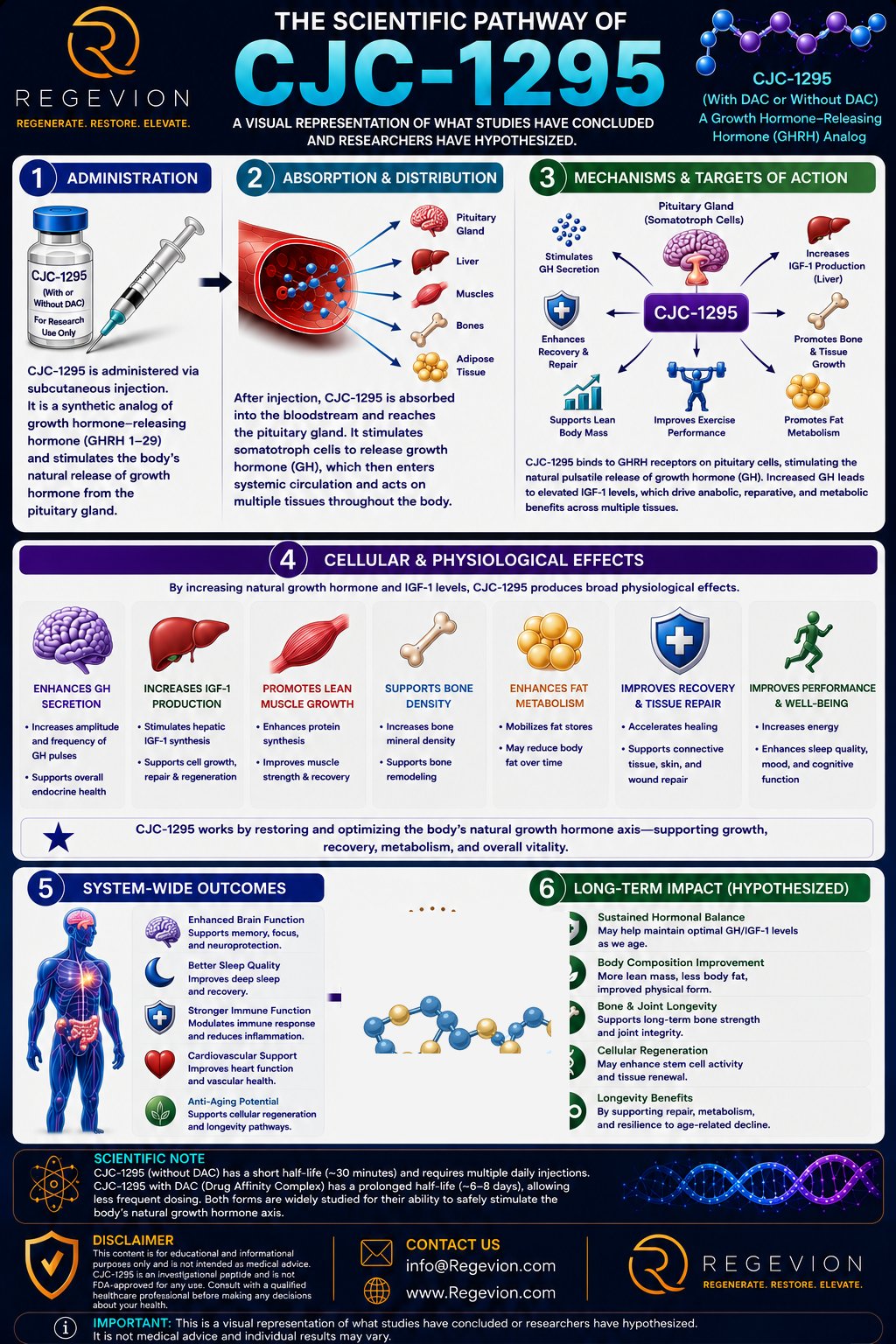
CJC-1295 is best understood not as a replacement for growth hormone (GH), but as a long-acting analog of growth hormone–releasing hormone (GHRH) acting upstream of GH. Its central pharmacological effect is increasing signaling through the GHRH receptor (GHRH-R) on pituitary somatotrophs, changing the amount and pattern of GH released into circulation.
One distinction comes first: CJC-1295 with the Drug Affinity Complex (DAC) is the form for which the principal human pharmacokinetic and pharmacodynamic data exist — the DAC modification gives the molecule prolonged exposure through albumin binding. Products described as “CJC-1295 without DAC” are pharmacologically different, often associated with modified GHRH(1-29) compounds, with much more limited comparable human clinical evidence. The mechanistic conclusions below refer specifically to CJC-1295-DAC unless otherwise stated.¹
1. The Biological Architecture
The pathway begins in the hypothalamus, where neurons produce GHRH, which travels through the hypothalamic–pituitary portal circulation to the anterior pituitary and reaches somatotrophs. The normal system is a balance, not a simple on/off switch: GHRH stimulates GH secretion while somatostatin inhibits it, and GH/IGF-1 participate in negative feedback that prevents the system from becoming excessively active. GH secretion therefore occurs naturally in pulses whose timing and magnitude are shaped by sleep, nutrition, age, body composition, and other endocrine signals.
CJC-1295 enters this system at the GHRH step: CJC-1295 → GHRH receptor → pituitary somatotroph → GH secretion → GH receptor signaling → IGF-1 production → downstream tissue effects. CJC-1295 doesn’t supply GH directly — it attempts to stimulate the body’s own pituitary GH machinery.
2. Molecular Mechanism of Action
The principal molecular target is the GHRH receptor, a class B G-protein-coupled receptor expressed prominently on pituitary somatotrophs. When GHRH or an active analog engages this receptor, it couples predominantly to stimulatory G-proteins: GHRH receptor activation → Gs protein signaling → adenylyl cyclase activation → increased intracellular cAMP → protein kinase A and related signaling → GH synthesis and secretion. The rise in cAMP converts an extracellular hormonal signal into intracellular activity, promoting release of GH-containing secretory vesicles and supporting transcriptional machinery involved in GH production; GHRH-receptor signaling can additionally engage MAP kinase signaling, contributing to somatotroph function.² This is why CJC-1295 is classified pharmacologically as a GHRH agonist/analog rather than a GH molecule.
3. From GH to IGF-1
GH binds the growth hormone receptor (GHR) on target tissues, particularly the liver, initiating JAK2–STAT5 signaling; STAT5 acts as a transcriptional regulator, entering the nucleus and influencing expression of genes including IGF-1. The liver is the major source of circulating endocrine IGF-1, though muscle, bone, adipose tissue, and other tissues produce IGF-1 locally.³ IGF-1 then acts through the IGF-1 receptor (IGF-1R), a receptor tyrosine kinase whose activation initiates PI3K/Akt and MAPK-related phosphorylation networks influencing cellular growth, survival, differentiation, and metabolism.
The complete chain: CJC-1295 → GHRH-R activation → cAMP signaling in somatotrophs → increased GH secretion → GHR activation → JAK2/STAT5 signaling → increased IGF-1 production → IGF-1R signaling in peripheral tissues → changes in cellular and systemic physiology. This is the central mechanism through which a relatively small pituitary-level peptide signal can ultimately influence multiple organs.
4. Pharmacology: Why the DAC Changes Everything
Native GHRH is relatively short-lived; CJC-1295-DAC was engineered to solve part of this pharmacokinetic problem. The Drug Affinity Complex lets the molecule bind strongly to circulating albumin, which acts as a large carrier protein creating a reservoir that reduces rapid renal and enzymatic clearance. Human pharmacokinetic studies estimated a CJC-1295 half-life of approximately 5.8–8.1 days — dramatically longer than the short exposure expected from native GHRH.¹ This produces an important consequence: a short-lived GHRH signal means brief receptor stimulation, while CJC-1295-DAC’s prolonged systemic exposure means sustained GHRH-receptor stimulation. The long half-life doesn’t simply mean “more peptide stays in the body” — it fundamentally changes the temporal pattern of receptor stimulation.
5. Pharmacokinetics & Pharmacodynamics
In the principal human studies, CJC-1295 was given subcutaneously; after administration it entered systemic circulation and produced prolonged pharmacodynamic effects on the GH/IGF-1 axis. Following a single dose, investigators observed dose-dependent increases in mean GH concentrations lasting approximately six days or longer, while IGF-1 remained elevated for approximately 9–11 days; after repeated administration, IGF-1 remained above baseline for as long as approximately 28 days, demonstrating accumulation of biological effect with repeated exposure.¹ This illustrates an important principle: pharmacokinetic half-life and biological effect are related but not identical — the peptide can persist in circulation while downstream hormones continue changing after the original molecule’s concentration begins to decline, since the GH/IGF-1 system has its own kinetics, feedback mechanisms, and tissue responses.
6. Dose, Exposure & Dose-Response
The early human studies provide unusually useful dose-response information because investigators examined ascending doses and measured both GH and IGF-1: after a single administration, mean GH concentrations increased approximately 2- to 10-fold depending on dose, while mean IGF-1 increased approximately 1.5- to 3-fold, showing a relationship between exposure and endocrine response.¹ But the relationship wasn’t simply “more is always better” — a separate pulsatility study examined 60 and 90 μg/kg; both increased GH and IGF-1, but investigators found no significant difference between the two dose responses, demonstrating how a biological system can show diminishing incremental response even as exposure increases.⁴ The scientific sequence is better represented as dose → systemic exposure → GHRH-R stimulation → GH response → IGF-1 response rather than a proportional increase across every outcome — different points in the pathway can become limiting or saturable.
7. What Happens at Different Exposure Levels?
At lower exposure, receptor stimulation can increase GH secretion without necessarily producing the maximal downstream endocrine response. At moderate exposure, sustained GHRH-receptor stimulation produces more pronounced changes in circulating GH and subsequently IGF-1. At higher exposure, increasing the dose doesn’t guarantee a proportionally larger endocrine response — the pituitary receptor system, intracellular signaling machinery, hormone feedback loops, and downstream tissue responses can all contribute to a plateau. One particularly interesting finding: prolonged CJC-1295 exposure didn’t simply eliminate GH pulsatility. In the dedicated human study, GH pulse frequency and magnitude were preserved; instead, trough GH concentration increased substantially, raising overall mean GH secretion while pulsatile secretion remained recognizable.⁴ That’s a more nuanced picture than the common description of CJC-1295 as simply “keeping GH elevated.”
8. Does Body Weight Affect Dose?
The principal human pharmacology studies used weight-normalized doses (μg/kg) rather than establishing a modern fixed-dose clinical regimen, but these studies don’t establish that CJC-1295 should be individually weight-adjusted in clinical practice — there’s insufficient clinical evidence to conclude body weight alone determines the appropriate exposure or biological response. Body composition can influence the endogenous GH/IGF-1 axis (visceral adiposity is associated with altered GH secretion), and age, sex, nutritional status, and insulin sensitivity also affect GH dynamics. Body weight and GH biology are related, but that relationship shouldn’t automatically translate into a dosing rule.
9. Connecting the Mechanism to Physiology
CJC-1295’s downstream effects are best understood as consequences of altering the GH/IGF-1 axis, not as direct effects of CJC-1295 on every tissue where a physiological change eventually appears. GH acts directly on tissues through GHR while also stimulating IGF-1 production; GH has important effects on lipid metabolism, protein metabolism, and glucose physiology, while IGF-1 contributes strongly to anabolic and cellular-growth signaling.³ So: pituitary receptor activation → increased GH signaling → hepatic and local IGF-1 signaling → altered metabolic and cellular activity → systemic physiological consequences. This matters when interpreting research — an observed change in body composition, metabolism, or another endpoint can’t automatically be attributed to a direct action of CJC-1295 on that tissue; it may be mediated primarily through the hormonal cascade initiated at the pituitary.
10. Combination & Pathway Interaction
CJC-1295 operates within a biological network already containing multiple stimulatory and inhibitory signals: somatostatin counterbalances GHRH, IGF-1 participates in negative feedback at both hypothalamic and pituitary levels, and ghrelin and other signals can also influence GH secretion.³ This means the response to CJC-1295 isn’t determined solely by the peptide’s concentration — it results from interaction between an administered GHRH analog and a pre-existing endocrine control system. Claims about combining CJC-1295 with other GH-secretagogue peptides should be treated separately from CJC-1295’s established mechanism: combination regimens aren’t necessary to explain its molecular pharmacology, and evidence for one combination can’t automatically be extrapolated to another.
11. What Scientists Still Do Not Fully Understand
Several questions remain open. One is the significance of prolonged GHRH-receptor stimulation compared with the body’s normal short-lived GHRH signaling — human studies demonstrate sustained GH and IGF-1 changes, but the full consequences of chronically altering this endocrine pattern aren’t established. Another concerns tissue-specific signaling: GH and IGF-1 don’t behave identically in every tissue, and endocrine IGF-1 doesn’t account for every local IGF-1 effect. There’s also an important distinction between the well-characterized pharmacology of CJC-1295-DAC and compounds marketed as CJC-1295 without DAC — the two shouldn’t be treated as interchangeable when interpreting pharmacokinetic or clinical evidence. Finally, long-term human data remain limited: the available studies establish that CJC-1295 can substantially modify GH/IGF-1 physiology, but not with the same depth of long-term evidence available for established endocrine medicines.
Why This Matters
CJC-1295 is scientifically interesting because it demonstrates how molecular engineering can reshape an endogenous hormonal signal. The molecule begins at the GHRH receptor on the pituitary somatotroph; receptor activation increases cAMP-dependent signaling and GH secretion; GH then activates its receptor in peripheral tissues, particularly the liver, where JAK2–STAT5 signaling promotes IGF-1 production; IGF-1 subsequently communicates with cells throughout the body through its own receptor and signaling network: molecular signal → cellular signaling → endocrine amplification → tissue response → whole-body physiology. Understanding that chain is more informative than simply saying CJC-1295 “increases growth hormone” — its significance lies in how it changes the architecture and duration of the body’s own GH/IGF-1 signaling system.
References
- Teichman S, et al. Prolonged Stimulation of Growth Hormone (GH) and Insulin-Like Growth Factor I Secretion by CJC-1295, a Long-Acting Analog of GH-Releasing Hormone, in Healthy Adults. Journal of Clinical Endocrinology & Metabolism. 2006. https://pubmed.ncbi.nlm.nih.gov/16352683/
- Regulation of the pituitary somatotroph cell by GHRH and its receptor. https://pubmed.ncbi.nlm.nih.gov/11036940/
- Normal Physiology of Growth Hormone in Adults. Endotext (NCBI Bookshelf). https://www.ncbi.nlm.nih.gov/books/NBK279056/
- Ionescu M, Frohman LA. Pulsatile Secretion of Growth Hormone (GH) Persists during Continuous Stimulation by CJC-1295, a Long-Acting GH-Releasing Hormone Analog. Journal of Clinical Endocrinology & Metabolism. 2006. https://pubmed.ncbi.nlm.nih.gov/17018654/