What the studies actually found
In the foundational 2015 study, MOTS-c treatment prevented both age-related and high-fat-diet-induced insulin resistance in mice, and prevented diet-induced obesity — activating AMPK, the same master metabolic switch that exercise turns on.
READ THE RESEARCH →This isn't animal data — it's measured directly in human skeletal muscle during acute exercise, which is part of why researchers describe MOTS-c as an "exercise mimetic": a molecule that may reproduce some of what exercise does to metabolism.
READ THE RESEARCH →Since the 2024 World Anti-Doping Agency Prohibited List, MOTS-c has been banned at all times as a metabolic-modulating AMPK activator — a real-world signal, from an organization with no commercial stake, that the physiological effects are taken seriously.
READ THE RESEARCH →In February 2026, a Phase 2a randomized, placebo-controlled trial (MOTS-MET) began testing MOTS-c in 120 adults with prediabetes. Then in July 2026, an FDA advisory committee voted 7-5 in favor of MOTS-c for pharmacy compounding — advisory only, not approval, but a real, live regulatory signal.
READ THE RESEARCH →Mitochondria have their own tiny genome, long assumed to just encode energy-production machinery. MOTS-c was discovered hidden in a short reading frame inside that mitochondrial DNA — a genuine hormone the body had been making all along, undetected.
EXPLORE THE SCIENCE →MOTS-c — Overview
What Is MOTS-c?
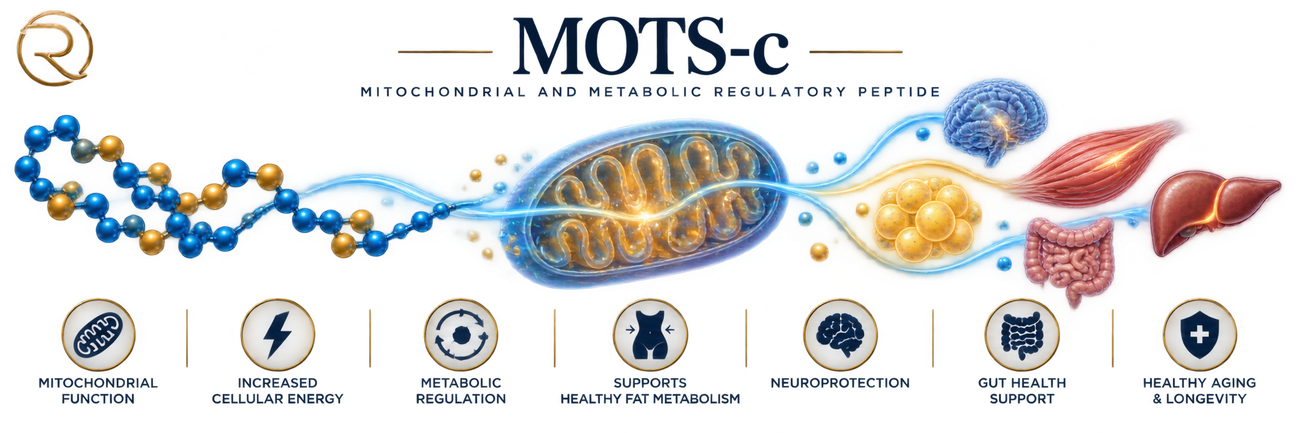
MOTS-c is a small peptide with an unusual origin: it’s encoded by the mitochondrial genome, the DNA contained inside the mitochondria of human cells. Unlike most peptides studied in human biology, which are encoded by nuclear DNA, MOTS-c comes from a short open reading frame within the mitochondrial gene region that produces 12S ribosomal RNA. The name reflects its origin — Mitochondrial Open Reading frame of the 12S rRNA type-C, shortened to MOTS-c. It’s a naturally occurring peptide consisting of just 16 amino acids: Met-Arg-Trp-Gln-Glu-Met-Gly-Tyr-Ile-Phe-Tyr-Pro-Arg-Lys-Leu-Arg.
That small size is deceptive. MOTS-c belongs to a relatively new class of molecules called mitochondrial-derived peptides (MDPs), which have changed how scientists think about mitochondria. Mitochondria were traditionally viewed primarily as the structures responsible for producing cellular energy, but research into MOTS-c and related peptides suggests they can also function as sources of biological signals that communicate information about the cell’s metabolic state. MOTS-c is particularly interesting because its activity appears to connect mitochondrial function with broader systems such as glucose metabolism, energy balance, cellular stress responses, and adaptation to physiological challenges — representing part of a larger scientific shift: the realization that mitochondria may participate in communication throughout the body by producing signaling molecules of their own.
Scientific Discovery & Development
The scientific story behind MOTS-c began with an unexpected question: if the mitochondrial genome could encode one signaling peptide, could it encode others? That question emerged from earlier work on Humanin, one of the first recognized mitochondrial-derived peptides. In 2001, Yasuo Hashimoto and colleagues at Keio University School of Medicine in Tokyo identified Humanin while investigating mechanisms of neuronal cell death associated with familial Alzheimer’s disease.¹ Humanin demonstrated that small open reading frames within mitochondrial DNA could produce biologically active peptides, challenging the long-standing assumption that mitochondrial DNA was primarily concerned with encoding the machinery required for mitochondrial function.
Researchers at the University of Southern California, working with collaborators at UCLA and the National Institute on Aging, began looking systematically for additional mitochondrial peptides. In 2015, Changhan Lee, Pinchas Cohen, Rafael de Cabo, and colleagues reported the discovery of MOTS-c in Cell Metabolism, identifying a short open reading frame within the mitochondrial 12S rRNA region that encodes this previously unrecognized 16-amino-acid peptide.² Early experiments suggested MOTS-c could influence metabolic homeostasis, particularly in skeletal muscle, and could affect the way cells respond to metabolic stress — in animal studies, administration of MOTS-c was associated with protection against diet-induced obesity and insulin resistance, as well as age-associated insulin resistance. The researchers proposed that mitochondria could actively participate in whole-body metabolic regulation through peptides encoded by their own genome.
Subsequent research expanded the picture into aging, exercise, glucose regulation, metabolic disease, cardiovascular biology, bone biology, and cellular stress, with contributions from research groups in the United States, South Korea, Japan, and elsewhere. What began as the discovery of an unexpected mitochondrial peptide therefore developed into a broader scientific question: could mitochondria communicate with the rest of the cell — and potentially the rest of the body — to coordinate adaptation to metabolic and physiological stress?
Why Researchers Are Studying MOTS-c
The central attraction of MOTS-c is its apparent connection between mitochondrial activity and metabolic regulation. Every cell must constantly balance energy production, nutrient availability, and cellular stress, and when that balance is disrupted — during aging, overnutrition, metabolic disease, or intense physical demand — the cell must adapt. MOTS-c appears to be part of this adaptive biology.
Researchers are investigating whether MOTS-c acts as a mitochondrial signal that helps cells respond when their metabolic environment changes. Much of the interest has centered on glucose handling and insulin sensitivity, but the potential significance is broader because metabolism connects to virtually every major physiological system. Early animal research suggested MOTS-c could improve metabolic homeostasis and reduce insulin resistance; later research has explored relationships between MOTS-c and aging, exercise, cardiovascular function, bone metabolism, and other age-associated processes. This makes MOTS-c especially interesting to researchers studying healthspan — not simply how long an organism lives, but how effectively its cells and tissues maintain function as they age. Importantly, much of the evidence remains preclinical or observational; scientific interest shouldn’t be confused with established therapeutic efficacy.
Biological Foundation
To understand why MOTS-c is unusual, it helps to understand the role of mitochondria. Mitochondria are often described as the cell’s “powerhouses” because they generate much of the energy required for cellular activity — but that description is incomplete. Mitochondria also sense changes in nutrients, energy availability, and cellular stress, and they communicate with the nucleus and influence processes throughout the cell. MOTS-c appears to participate in this communication.
The peptide is produced from mitochondrial genetic material and has been detected in circulation as well as within tissues; research indicates its biological behavior can change under conditions of metabolic or cellular stress. One particularly interesting observation is that MOTS-c can move from the mitochondria into the cell nucleus under certain stress conditions, where it appears to influence gene-regulatory responses³ — suggesting a communication pathway in which mitochondria can detect a changing environment and contribute to the instructions that determine how the cell responds. That places MOTS-c at the intersection of several biological layers: mitochondrial function → cellular stress → metabolic signaling → gene regulation → tissue response. The detailed molecular mechanisms are explored more deeply on the Science page.
What Researchers Are Investigating
Metabolic regulation — early experiments indicated MOTS-c could influence pathways involved in glucose utilization and insulin sensitivity. Researchers became particularly interested in skeletal muscle, a major site of glucose disposal and an important contributor to whole-body metabolic health.
Exercise biology — exercise places substantial metabolic demands on muscle and mitochondria, and human research has found that circulating mitochondrial-derived peptides, including MOTS-c, can change in response to exercise, supporting the possibility that these peptides participate in the body’s adaptive response to physical stress.⁴ This has led researchers to examine MOTS-c as part of the broader phenomenon known as mitohormesis — the concept that controlled mitochondrial stress can trigger adaptive responses that strengthen cellular resilience.
Aging biology — circulating MOTS-c levels have been reported to decline with age, while experimental studies have linked MOTS-c biology with several processes associated with aging. Researchers are investigating whether these changes are simply markers of aging or reflect a functional component of age-related metabolic decline.
Cardiovascular and bone biology — scientists are also examining possible connections with these and other age-related conditions, findings that are scientifically intriguing because they suggest a mitochondrial signal could influence tissues far beyond the mitochondria in which the peptide originates.
These research areas represent different levels of evidence — some findings come from cell and animal models, while human studies have largely examined circulating MOTS-c, physiological associations, or responses to conditions such as exercise. Whether MOTS-c can be developed into a safe and effective human therapy remains unresolved.
Potential Benefits & Biological Significance
MOTS-c’s potential significance comes less from a single proposed effect than from the possibility that it represents a system-wide metabolic signaling mechanism. If mitochondrial-derived signals help coordinate how cells respond to changes in energy availability and stress, MOTS-c could become important to understanding why metabolic resilience changes with aging. Research has explored potential connections with improved glucose regulation, insulin sensitivity, body composition, exercise adaptation, and protection against certain metabolic disturbances, and preclinical findings have also generated interest in age-related cardiovascular and skeletal conditions.
But the distinction between biological possibility and clinical proof is essential. The strongest experimental evidence for many proposed effects comes from preclinical research — human studies provide valuable information about the presence and behavior of MOTS-c in people, but don’t yet establish that administering MOTS-c produces the same outcomes observed in experimental models. That gap is precisely what makes the peptide scientifically important: MOTS-c isn’t interesting simply because it has been associated with a long list of potential benefits, but because it may reveal a previously underappreciated way in which mitochondrial biology communicates with metabolism, stress adaptation, and aging.
Current Research Stage & Future Outlook
As of 2026, MOTS-c remains an investigational peptide and is not FDA approved for any medical indication — there is no established Phase 1–3 clinical development program demonstrating its safety and efficacy as a therapeutic drug. It’s worth distinguishing between studying naturally occurring MOTS-c in humans and administering a manufactured MOTS-c product: human research has measured circulating MOTS-c and examined its biological associations, but the FDA has stated it has not identified human exposure data for drug products containing MOTS-c administered by any route, and important questions about safety, including immunogenicity, remain unanswered.
In July 2026, the FDA’s Pharmacy Compounding Advisory Committee considered MOTS-c-related bulk substances in connection with proposed uses involving obesity and osteoporosis (among other nominated uses, including insulin resistance, vascular calcification, and longevity). FDA staff’s own briefing document recommended against adding either MOTS-c free base or MOTS-c acetate to the 503A Bulks List, citing inadequate physicochemical characterization, unknown history of compounding use, no human effectiveness data, and unassessed immunogenicity risk — but the committee’s actual vote went the other way, reportedly 7–5 with two abstentions in favor of inclusion.⁵ This follows the same staff-versus-committee divergence pattern seen with several other peptides reviewed at that same July 2026 meeting. Either way, that regulatory discussion doesn’t represent FDA approval or confirmation of therapeutic effectiveness — it reflects ongoing regulatory evaluation of an investigational substance, and advisory committee recommendations are non-binding. The future of MOTS-c will depend on whether researchers can translate its intriguing biological signals into reproducible human findings while establishing appropriate pharmacology, dosing, safety, and clinical benefit.
Global Research Perspective
MOTS-c research has developed through an international scientific network. The peptide was initially characterized by researchers in the United States, including investigators associated with the University of Southern California, UCLA, and the National Institute on Aging. Subsequent work has expanded through research groups in South Korea, Japan, and other countries investigating MOTS-c in metabolism, diabetes, exercise, aging, and age-related disease — Japan has also been important to the broader study of mitochondrial-derived peptides and longevity biology, while South Korean researchers have contributed substantially to work examining MOTS-c in metabolic and exercise-related physiology. This international expansion reflects the larger scientific significance of MOTS-c: the question is no longer simply whether one newly discovered peptide has an interesting biological effect, but whether mitochondrial genomes encode a previously overlooked class of signals capable of coordinating adaptation throughout the body.
Why This Matters
MOTS-c matters because it challenges a simple view of what mitochondria are — not only cellular structures that produce energy, but potentially also sources of signaling molecules that help the body recognize and respond to metabolic stress. MOTS-c is one of the clearest examples of this emerging biology; its discovery opened a new area of research into mitochondrial-derived peptides and raised a larger question about how mitochondrial signals influence metabolism, adaptation, and aging. The evidence is still developing, and many of the most exciting possibilities remain questions rather than conclusions — that’s exactly why MOTS-c deserves continued scientific attention. Understanding what researchers have discovered so far, and what remains unknown, provides the foundation for exploring the research evidence and biological mechanisms in greater depth on the Research and Science pages.
References
- Hashimoto Y, Niikura T, Tajima H, et al. A rescue factor abolishing neuronal cell death by a wide spectrum of familial Alzheimer’s disease genes and Aβ. Proceedings of the National Academy of Sciences. 2001;98(11):6336-6341. https://pubmed.ncbi.nlm.nih.gov/11371646/
- Lee C, Zeng J, Drew BG, et al. The mitochondrial-derived peptide MOTS-c promotes metabolic homeostasis and reduces obesity and insulin resistance. Cell Metabolism. 2015. https://pubmed.ncbi.nlm.nih.gov/25738459/
- Kim KH, Son JM, Benayoun BA, Lee C. The Mitochondrial-Encoded Peptide MOTS-c Translocates to the Nucleus to Regulate Nuclear Gene Expression in Response to Metabolic Stress. Cell Metabolism. 2018. https://pubmed.ncbi.nlm.nih.gov/29983246/
- von Walden F, Fernandez-Gonzalo R, et al. Acute endurance exercise stimulates circulating levels of mitochondrial-derived peptides in humans. Journal of Applied Physiology. 2021. https://pubmed.ncbi.nlm.nih.gov/34351816/
- FDA Briefing Document, Pharmacy Compounding Advisory Committee (PCAC) Meeting, July 2026 — MOTS-c review (staff recommended against 503A inclusion; committee vote 7-5, two abstentions, in favor of inclusion, per meeting reporting).
MOTS-c — The Research
How Was MOTS-c Discovered?
The scientific story behind MOTS-c began with a change in how researchers thought about mitochondria. For decades, mitochondria were primarily viewed as the cell’s energy-producing organelles, but researchers gradually found that mitochondria also communicate with the rest of the cell through signaling molecules. One important clue appeared in 2001, when Yasuo Hashimoto and colleagues at Keio University School of Medicine in Tokyo identified a small peptide they named Humanin while investigating mechanisms of neuronal cell death associated with familial Alzheimer’s disease.¹ Humanin was unusual because its genetic sequence was linked to mitochondrial DNA, suggesting mitochondria could produce biologically active signaling peptides rather than simply supplying cellular energy — opening a much larger question: how many other signaling peptides might be hidden inside the mitochondrial genome?
At the University of Southern California, Changhan Lee, Pinchas Cohen, and colleagues pursued that question. In 2015, they identified a previously unrecognized 16-amino-acid peptide encoded by a short open reading frame within the mitochondrial 12S ribosomal RNA region, naming it MOTS-c — mitochondrial open reading frame of the 12S rRNA type-c.² The discovery was important because MOTS-c wasn’t simply another mitochondrial protein — it appeared to function as a signaling molecule capable of influencing systemic metabolic physiology. In their landmark Cell Metabolism study, Lee and colleagues found that MOTS-c affected insulin sensitivity and metabolic homeostasis, particularly in skeletal muscle; in mice, treatment prevented several features of diet-induced metabolic dysfunction, including insulin resistance and obesity. The scientific question had therefore changed — researchers were no longer asking only what mitochondria do with energy, but whether mitochondria could actively communicate metabolic information to the rest of the organism through peptides encoded in their own genome.
Evolution of the Research
From metabolic signaling to exercise biology. The first studies positioned MOTS-c primarily as a regulator of metabolic stress. Subsequent research expanded the picture toward exercise, skeletal muscle, aging, and energy adaptation. One early mechanistic direction came from studies showing that MOTS-c could influence cellular pathways associated with energy sensing — researchers found the peptide could alter folate-cycle and purine-biosynthesis activity, increasing signaling through AMPK, an important cellular energy sensor, providing a plausible explanation for some of the metabolic effects observed in animal models.
The next major shift came when researchers began asking whether MOTS-c was part of the body’s normal response to exercise rather than merely a molecule that could be administered experimentally. Human studies subsequently demonstrated that exercise can alter endogenous MOTS-c expression in skeletal muscle and circulating blood — a 2021 study found that endurance exercise significantly raised circulating mitochondrial-derived peptides in humans.³ At the same time, animal research began connecting MOTS-c with physical performance and age-related decline. A major 2021 study reported that MOTS-c administration improved physical performance in young, middle-aged, and old mice, and that intermittent treatment initiated late in life increased physical capacity and healthspan measures; the investigators also observed exercise-associated increases in endogenous MOTS-c in humans.⁴ This transformed the research question again — MOTS-c was beginning to look less like a peptide studied solely for a single metabolic endpoint and more like part of a broader mitochondrial stress-adaptation system.
The Most Important Studies
2015 — The Foundational Discovery. “The mitochondrial-derived peptide MOTS-c promotes metabolic homeostasis and reduces obesity and insulin resistance,” by Changhan Lee, Jennifer Zeng, Brian Drew, Rafael de Cabo, Pinchas Cohen, and colleagues at the University of Southern California, UCLA, and the U.S. National Institute on Aging.² Researchers asked whether a previously unrecognized peptide encoded by mitochondrial DNA could regulate whole-body metabolism — they identified the MOTS-c sequence, investigated its cellular effects, and administered the peptide to mouse models of metabolic dysfunction (0.5 mg/kg/day over 8 weeks in a diet-induced-obesity protocol; 5 mg/kg/day for 7 days in an acute insulin-sensitivity experiment). They found MOTS-c influenced metabolic signaling and improved insulin sensitivity, and in mice, treatment reduced susceptibility to high-fat-diet-induced obesity and insulin resistance. This was the study that established MOTS-c as a biologically active mitochondrial-derived peptide and created the foundation for almost everything that followed.
2016 — MOTS-c and Bone Biology. “Mitochondria related peptide MOTS-c suppresses ovariectomy-induced bone loss via AMPK activation,” published in Biochemical and Biophysical Research Communications.⁵ In a mouse model of postmenopausal-like bone loss, MOTS-c treatment reduced bone loss and inhibited osteoclast differentiation, with the investigators linking part of this effect to AMPK signaling. This study expanded MOTS-c research beyond glucose and energy metabolism into skeletal biology; later cell-based research also investigated effects on osteoblast differentiation and collagen production, but these findings remain preclinical rather than evidence that MOTS-c treats osteoporosis in humans.
2019 — Human Metabolic Regulation Becomes More Important. “Lipids and insulin regulate mitochondrial-derived peptide (MOTS-c) in PCOS and healthy subjects,” a human metabolic physiology study from researchers in the UK and Qatar.⁶ Experimentally increasing circulating lipids (via intralipid infusion) increased plasma MOTS-c in both healthy controls and women with PCOS, while insulin blunted that lipid-induced rise. After an 8-week exercise program, lipids again raised MOTS-c, but the insulin-blunting effect held only in controls — it was lost in the PCOS group. This finding was important because it showed human MOTS-c physiology is more complicated than a simple “exercise raises MOTS-c” model — metabolic state, insulin, lipid availability, training status, underlying condition, and the specific tissue being measured may all influence what researchers observe. That complexity matters when interpreting MOTS-c biomarker studies.
2021 — Aging, Muscle, and Physical Performance. “MOTS-c is an exercise-induced mitochondrial-encoded regulator of age-dependent physical decline and muscle homeostasis,” published in Nature Communications by Reynolds, Lai, Woodhead, and colleagues, with Pinchas Cohen, Rafael de Cabo, and Changhan Lee among the co-authors.⁴ This study asked whether MOTS-c could influence the decline in physical capacity associated with aging. Researchers found MOTS-c improved measures of physical performance in mice across different ages, with evidence of effects on skeletal-muscle metabolism and adaptation to metabolic stress; when treatment was initiated late in life (starting around 23.5 months of age), intermittent MOTS-c administration improved grip strength, gait, and other measures of physical capacity and healthspan in aged mice. Human measurements in the same study showed that exercise significantly increases endogenous MOTS-c expression in skeletal muscle (nearly 12-fold) and circulation. This study connected three previously separate observations — mitochondrial signaling, exercise adaptation, and aging biology — helping establish MOTS-c as a potential mediator of metabolic resilience rather than simply a metabolic drug candidate.
Research Findings by Major Biological Area
Metabolism and insulin sensitivity remains the strongest scientific theme surrounding MOTS-c. Animal studies consistently provide evidence that administered MOTS-c can improve insulin sensitivity and alter metabolic pathways associated with obesity and excess nutrient availability.⁷ Metabolomic research has further shown changes in sphingolipid, monoacylglycerol, and dicarboxylate metabolism in treated obese mice, alongside increased fatty-acid oxidation and reduced metabolic dysfunction. Human observational evidence is more complicated — some studies have found lower circulating MOTS-c in specific populations with obesity and insulin resistance, while newer research has reported elevated circulating MOTS-c in adults with obesity and metabolic dysregulation. A 2024 systematic review and meta-analysis concluded that mitochondrial-derived peptide concentrations are associated with metabolic states, but also highlighted substantial heterogeneity between studies.⁸ The preclinical metabolic signal is strong enough to justify clinical investigation, but circulating MOTS-c shouldn’t yet be interpreted as a simple laboratory marker where higher or lower automatically means better metabolic health.
Exercise and skeletal muscle has become one of the most interesting areas of MOTS-c research. Studies indicate physical activity can increase MOTS-c expression in skeletal muscle and influence circulating concentrations; animal experiments suggest administered MOTS-c can improve exercise capacity and help skeletal muscle adapt to metabolic stress. More recent work has connected endurance training with MOTS-c secretion and mitochondrial respiratory function, and a 2026 study in Free Radical Biology & Medicine provided additional mechanistic evidence that MOTS-c can improve intrinsic muscle mitochondrial bioenergetic health and efficiency in a PGC-1α/AMPK-dependent manner.⁹ Researchers are increasingly studying MOTS-c as part of the biology of metabolic adaptation to exercise, rather than simply as an isolated performance-enhancing molecule.
Aging biology remains largely preclinical. MOTS-c has attracted attention because mitochondrial dysfunction, metabolic inflexibility, and declining physical capacity are all associated with aging, and the 2021 mouse study provided evidence that MOTS-c could improve physical performance even when treatment began late in life.⁴ However, improved healthspan measures in mice aren’t equivalent to demonstrated lifespan or healthspan benefits in humans — aging research provides one of the strongest scientific reasons for continued investigation, but it remains an experimental field rather than an established clinical application.
Bone and skeletal biology — research in mice and cultured cells suggests MOTS-c may influence bone remodeling, osteoclast activity, and osteoblast biology, connecting mitochondrial signaling with skeletal tissue regulation.⁵ But there is currently no comparable body of human clinical evidence demonstrating that MOTS-c prevents fractures, increases bone density, or treats osteoporosis.
Human Research & Clinical Evidence
This is where the evidence becomes especially important to interpret correctly. MOTS-c has been studied in humans primarily through observational and exercise-related research rather than completed therapeutic trials demonstrating clinical efficacy. Researchers have measured endogenous MOTS-c in different populations and examined how it changes with exercise, metabolic conditions, lipids, insulin, obesity, and other physiological states. These studies establish that MOTS-c is present in humans and responds to physiological conditions, but they don’t establish that administering synthetic MOTS-c produces the same outcomes observed in animal models.
The most important transition is now underway: a Phase 2a randomized, double-blind, placebo-controlled clinical trial (NCT07505745) began in February 2026 to evaluate subcutaneous MOTS-c in adults with prediabetes and overweight or obesity. The study plans to enroll approximately 120 participants and evaluate insulin sensitivity (via oral glucose tolerance test) after 12 weeks of treatment, alongside glucose, HbA1c, lipids, body weight, waist circumference, and safety measures, with estimated primary completion in February 2027.¹⁰ This is a major milestone because it moves MOTS-c from a largely preclinical research story into controlled therapeutic testing in humans.
Preclinical Research
The preclinical evidence is broad. Across mouse and cellular models, researchers have investigated MOTS-c in insulin resistance, obesity, exercise adaptation, skeletal muscle function, aging, bone metabolism, and other metabolic-stress conditions, with a recurring theme of improved cellular adaptation to metabolic stress, particularly in tissues such as skeletal muscle. But breadth shouldn’t be confused with clinical certainty — animal models are useful for discovering biological mechanisms and testing whether a molecule produces a reproducible physiological effect, but they can’t establish that the same effect, magnitude, dose-response relationship, or safety profile will occur in humans. MOTS-c currently has a substantial mechanistic and preclinical research base, but a comparatively young clinical evidence base.
Current Research Stage
As of 2026, MOTS-c remains investigational and is not an FDA-approved drug. The most important development is the ongoing Phase 2a human trial studying insulin sensitivity in adults with prediabetes and overweight/obesity. MOTS-c also recently entered a separate regulatory discussion in the United States: on July 23, 2026, the FDA’s Pharmacy Compounding Advisory Committee considered MOTS-c free base and MOTS-c acetate for possible inclusion on the 503A Bulk Drug Substances List, with obesity and osteoporosis among the evaluated uses (alongside nominated uses including insulin resistance, vascular calcification, and longevity). FDA’s briefing document — which also states that neither MOTS-c free base nor MOTS-c acetate is currently a component of an FDA-approved drug — recommended against inclusion, citing inadequate physicochemical characterization, an unknown history of compounding use, no human effectiveness data, and unassessed immunogenicity risk.
That staff recommendation, however, is distinct from what the advisory committee itself decided: reporting on the meeting indicates the committee’s actual vote went the other way, 7–5 with two abstentions in favor of recommending MOTS-c for inclusion — part of the same broader pattern seen across that July 2026 PCAC round, where committees voted favorably on several peptides (including BPC-157, KPV, and TB-500 at the same meeting) despite more cautious staff briefing positions. Either way, this advisory-committee process doesn’t constitute FDA approval, and FDA states that final determinations will occur only after the advisory process and remaining reviews are completed. Regulatory consideration is not the same as regulatory approval.
What the Evidence Shows
Stronger evidence currently comes from laboratory and animal research demonstrating reproducible effects on metabolic regulation, insulin sensitivity, exercise adaptation, skeletal muscle biology, and mitochondrial stress responses. The 2015 discovery study and subsequent animal work provide a coherent biological foundation for further investigation.
Emerging evidence — human observational and exercise studies establish that MOTS-c exists in humans and is physiologically responsive to metabolic and exercise-related conditions. These findings support the biological relevance of MOTS-c but don’t yet prove therapeutic benefit from administering it.
Early or experimental evidence — claims involving obesity treatment, osteoporosis treatment, anti-aging effects, enhanced physical performance, or broader longevity benefits remain investigational. Much of the evidence supporting these applications still comes from animal or cellular models. The decisive next step is controlled human intervention research.
What Researchers Are Studying Now
The field is moving toward a much more clinically meaningful question: can the biological effects observed in experimental models be reproduced safely and meaningfully in humans? The active Phase 2 study is testing whether MOTS-c can improve insulin sensitivity in adults with prediabetes and overweight/obesity, and will also examine metabolic markers and safety, providing the type of controlled evidence that earlier observational studies couldn’t provide. Other research continues to examine how exercise regulates endogenous MOTS-c, how the peptide interacts with skeletal-muscle mitochondrial function, and whether its effects are connected to broader adaptations involving AMPK and PGC-1α. Bone biology remains another active preclinical direction, although human evidence is still lacking. The central scientific challenge is now translation — determining whether MOTS-c is simply an interesting marker of mitochondrial and metabolic stress, or whether it can become a therapeutically useful signaling molecule.
Future Scientific Potential
MOTS-c remains scientifically interesting because its story is unusual from the beginning: it emerged from the mitochondrial genome, became linked to metabolic regulation, was subsequently associated with exercise adaptation and aging biology, and is now entering controlled human therapeutic research. The most compelling possibilities are therefore not established outcomes but research questions — whether MOTS-c can meaningfully improve insulin sensitivity, whether it can influence metabolic adaptation in humans, whether its exercise-associated biology can be therapeutically harnessed, and whether effects observed in animal models of aging and skeletal biology translate into people. The next generation of studies will determine how much of the remarkable preclinical story survives the transition into human medicine.
Why This Matters
MOTS-c changed the scientific conversation about mitochondria by showing that mitochondrial DNA can encode a peptide with systemic biological activity. The research that followed has connected MOTS-c with metabolic regulation, insulin sensitivity, exercise adaptation, skeletal muscle, aging biology, and bone metabolism. The strongest evidence remains preclinical, while human studies have primarily established physiological associations and responses. What makes the field particularly important now is the transition from discovery to clinical testing — with a Phase 2a randomized trial underway, researchers are beginning to answer the question that animal studies alone can’t resolve: does MOTS-c’s biology translate into a meaningful therapeutic effect in humans? That question — rather than the claims surrounding the peptide — is where the next important scientific chapter will be written.
References
- Hashimoto Y, Niikura T, Tajima H, et al. A rescue factor abolishing neuronal cell death by a wide spectrum of familial Alzheimer’s disease genes and Aβ. Proceedings of the National Academy of Sciences. 2001;98(11):6336-6341. https://pubmed.ncbi.nlm.nih.gov/11371646/
- Lee C, Zeng J, Drew BG, et al. The mitochondrial-derived peptide MOTS-c promotes metabolic homeostasis and reduces obesity and insulin resistance. Cell Metabolism. 2015. https://pubmed.ncbi.nlm.nih.gov/25738459/
- von Walden F, Fernandez-Gonzalo R, et al. Acute endurance exercise stimulates circulating levels of mitochondrial-derived peptides in humans. Journal of Applied Physiology. 2021. https://pubmed.ncbi.nlm.nih.gov/34351816/
- Reynolds JC, Lai RW, Woodhead JST, et al. MOTS-c is an exercise-induced mitochondrial-encoded regulator of age-dependent physical decline and muscle homeostasis. Nature Communications. 2021;12:470. https://pubmed.ncbi.nlm.nih.gov/33473109/
- Mitochondria related peptide MOTS-c suppresses ovariectomy-induced bone loss via AMPK activation. Biochemical and Biophysical Research Communications. 2016. https://pubmed.ncbi.nlm.nih.gov/27237975/
- Ramanjaneya M, Jerobin J, Bettahi I, et al. Lipids and insulin regulate mitochondrial-derived peptide (MOTS-c) in PCOS and healthy subjects. Clinical Endocrinology. 2019. https://pubmed.ncbi.nlm.nih.gov/31066084/
- Kim SJ, Miller B, Mehta HH, et al. The mitochondrial-derived peptide MOTS-c is a regulator of plasma metabolites and enhances insulin sensitivity. Physiological Reports. 2019. https://pubmed.ncbi.nlm.nih.gov/31293078/
- The correlation between mitochondrial derived peptide (MDP) and metabolic states: a systematic review and meta-analysis. Diabetology & Metabolic Syndrome. 2024. https://pubmed.ncbi.nlm.nih.gov/39160573/
- MOTS-c improves intrinsic muscle mitochondrial bioenergetic health and efficiency in a PGC-1α/AMPK-dependent manner. Free Radical Biology and Medicine. 2026.
- ClinicalTrials.gov NCT07505745 — Phase 2a randomized, double-blind, placebo-controlled trial of subcutaneous MOTS-c in adults with prediabetes and overweight/obesity.
MOTS-c — The Science
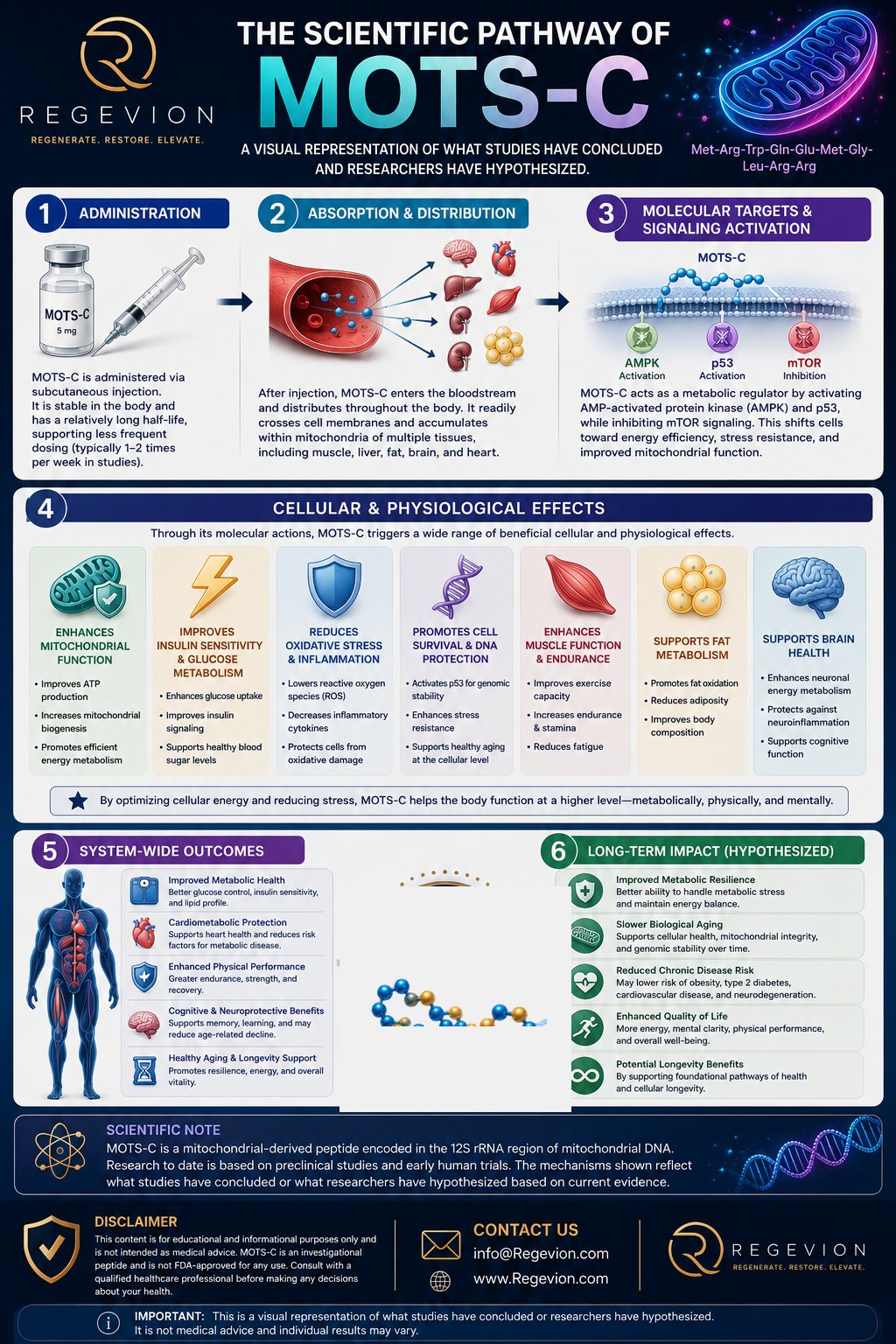
MOTS-c is unusual among peptides because its biological origin is inside the mitochondrion — the organelle best known for producing cellular energy. It’s a 16-amino-acid mitochondrial-derived peptide encoded by a short open reading frame within the mitochondrial 12S rRNA region of mitochondrial DNA. Rather than functioning simply as a structural mitochondrial protein, MOTS-c appears to participate in mitochondria-to-nucleus communication, helping cells respond when energy availability or metabolic conditions change.¹
The central mechanistic idea is therefore different from that of a conventional peptide hormone: MOTS-c acts as a metabolic stress signal. Its best-characterized pathway involves the folate cycle, AICAR, and AMP-activated protein kinase (AMPK), while a second important mechanism involves movement of MOTS-c into the nucleus and regulation of stress-response genes. Together, these pathways connect mitochondrial status with cellular metabolism and adaptation.
1. The Biological Architecture
Mitochondria constantly monitor the relationship between energy demand and energy availability. When energy demand rises — as during exercise, nutrient restriction, or cellular stress — metabolic pathways shift to maintain ATP production and protect the cell. MOTS-c appears to be part of this response network: it’s produced from mitochondrial DNA, can be detected in tissues and circulation, and responds to metabolic stress and exercise. Skeletal muscle is particularly important because it has enormous energy requirements and is a major site of glucose disposal; human studies have shown that circulating mitochondrial-derived peptides, including MOTS-c, can change following exercise, although the human response isn’t yet completely defined.²
The resulting architecture: metabolic stress or exercise → MOTS-c signaling → metabolic sensing → AMPK activation and stress-response gene regulation → cellular adaptation. This is why MOTS-c is often described as a mitokine — a signaling molecule originating from mitochondria that can influence physiology beyond the mitochondrion itself.
2. Molecular Mechanism of Action
The most established metabolic mechanism begins with the folate cycle, a group of reactions involved in transferring one-carbon units required for nucleotide synthesis and other cellular processes. Experimental work indicates that MOTS-c interferes with the folate cycle and its linked de novo purine biosynthesis pathway, causing accumulation of AICAR, a metabolic intermediate that can activate AMPK.¹ AMPK is one of the cell’s principal energy sensors — when activated, it shifts the cell away from energy-consuming processes and toward pathways that restore or generate usable energy.
The sequence: MOTS-c → altered folate/purine metabolism → increased AICAR → AMPK activation → metabolic adaptation. In skeletal muscle, AMPK activation can increase glucose uptake and promote pathways associated with fatty-acid utilization and energy production; experimental models consequently show improved insulin sensitivity and metabolic flexibility after MOTS-c exposure.³
Importantly, MOTS-c is not best understood as a conventional single-receptor agonist. No classical cell-surface receptor has been established as the universal receptor through which all MOTS-c effects occur — much of its biology appears to involve intracellular metabolic sensing and nuclear signaling rather than the familiar peptide-hormone model of receptor binding followed by a single second-messenger cascade.
3. AMPK, PGC-1α and Cellular Energy Adaptation
AMPK functions as a metabolic switch: when cellular energy demand rises, it promotes glucose uptake, fatty-acid oxidation, and other energy-producing processes while restraining pathways that consume energy unnecessarily. MOTS-c appears to converge on this system through AICAR and AMPK activation, and AMPK can also interact with PGC-1α, a major regulator of mitochondrial biogenesis and oxidative metabolism. Experimental work has identified an interconnected MOTS-c–AMPK–PGC-1α relationship in skeletal muscle, particularly in the context of exercise adaptation.⁴ A 2026 study extended this, reporting that MOTS-c improved intrinsic muscle mitochondrial bioenergetic health and efficiency in a PGC-1α/AMPK-dependent manner.⁵
This provides a mechanistic explanation for why MOTS-c research repeatedly intersects with exercise physiology — the peptide appears to engage some of the same cellular energy-sensing machinery that becomes active when muscle is metabolically challenged. The important distinction is that this doesn’t establish MOTS-c as a replacement for exercise in humans; it demonstrates that overlapping molecular pathways exist.
4. Nuclear Signaling: When a Mitochondrial Peptide Enters the Nucleus
One of the most unusual discoveries about MOTS-c is that its activity isn’t confined to the cytoplasm or mitochondria. Under metabolic stress, MOTS-c can translocate into the nucleus, where it interacts with DNA and stress-responsive transcription factors, including NRF2 (NFE2L2), a master regulator of antioxidant and cellular-defense genes. Research has shown MOTS-c associated with antioxidant-response-element-containing promoters, including regulatory regions controlling genes such as HO-1 and NQO1 — a form of retrograde signaling in which information originating from the mitochondrial genome influences nuclear gene expression.⁶
This produces a second major biological pathway: metabolic stress → AMPK activation → MOTS-c nuclear translocation → interaction with NRF2/stress-response machinery → altered gene expression → cellular stress adaptation. The precise molecular machinery controlling nuclear entry is still being investigated. A 2025 study proposed an additional transport mechanism involving the cytoskeletal protein MYH9, in the specific context of protecting lung tissue from ischemia-reperfusion injury — illustrating that MOTS-c trafficking is more complex than a simple receptor-mediated process, though this particular mechanism has so far been demonstrated in that one experimental model rather than established as MOTS-c’s general nuclear-transport route.⁷
5. Pharmacology: What Makes MOTS-c Different?
MOTS-c has several pharmacological characteristics that distinguish it from long-acting peptide drugs. It’s a small, unmodified 16-amino-acid peptide rather than a heavily engineered receptor agonist, and its biological activity appears to depend substantially on intracellular signaling, metabolic state, and tissue context. That creates an important pharmacodynamic distinction: exposure to the peptide isn’t necessarily identical to duration of biological effect — a peptide may be cleared from circulation relatively quickly while initiating downstream signaling that persists after circulating concentrations decline.
For native MOTS-c, however, the human pharmacokinetic profile remains inadequately characterized. There is currently no well-established human dataset defining its exogenous absorption, distribution, clearance, volume of distribution, or plasma half-life — precise human half-life claims should not be presented as established pharmacology.
6. Pharmacokinetics: What Happens After Administration?
This is one of the largest gaps in the MOTS-c literature. Most mechanistic work has been performed in cell systems or animals, using routes such as intraperitoneal administration — the original discovery study used doses of 0.5 mg/kg/day (an 8-week diet-induced-obesity protocol) and 5 mg/kg/day for 7 days (an acute insulin-sensitivity experiment).¹ Animal studies have repeatedly demonstrated biological activity following systemic administration, but these studies can’t establish the pharmacokinetic behavior of MOTS-c in humans. There is currently insufficient human evidence to confidently state how rapidly exogenous MOTS-c is absorbed, how widely it distributes, how it is metabolized, or how long it remains biologically active. This distinction matters because circulating MOTS-c measured naturally in humans is not equivalent to pharmacokinetic measurements following administration of an exogenous peptide.
7. Dose, Exposure & Dose-Response
MOTS-c does not yet have an established therapeutic human dose. Preclinical studies have used substantially different doses depending on the animal model, experimental objective, and route of administration — these are animal research doses, not validated human dosing recommendations. The biological response should be understood as dose → systemic exposure → tissue exposure → intracellular signaling → physiological response rather than assuming that increasing the dose continuously increases benefit — pharmacology predicts that signaling pathways can become saturated, compensatory responses can develop, and different tissues may respond differently to the same exposure. At present, there isn’t enough human dose-ranging evidence to define a reliable low-, medium-, or high-exposure response curve for native MOTS-c.
8. Human Research and the Emerging Dose Question
The human pharmacology of MOTS-c is now beginning to move beyond observational research. A registered Phase 2a randomized, double-blind, placebo-controlled trial (NCT07505745) is currently evaluating investigational MOTS-c in adults with prediabetes and overweight or obesity. The study uses subcutaneous administration over 12 weeks in roughly 120 participants and is designed to evaluate insulin sensitivity (via oral glucose tolerance testing) alongside glucose, HbA1c, lipid, body-composition, and safety measures; it began in February 2026 with estimated primary completion in February 2027.⁸ This trial is particularly important mechanistically because it’s designed to connect exogenous MOTS-c exposure with pharmacodynamic outcomes in humans. Until those data are available, human dose-response conclusions remain preliminary. Body weight should likewise not be assumed to determine the correct dose — whether body size meaningfully changes MOTS-c exposure, distribution, clearance, or pharmacodynamic response hasn’t been adequately established in humans.
9. Lower vs. Higher Exposure
The experimental literature suggests MOTS-c can influence several interconnected systems rather than producing a single isolated physiological effect. At the cellular level, metabolic signaling through AMPK can alter glucose handling and energy utilization; under stress conditions, nuclear MOTS-c signaling can additionally influence antioxidant and adaptive gene expression. At higher experimental exposures, additional effects may become detectable in animal models, including changes in adipose metabolism, thermogenesis, inflammatory signaling, and exercise capacity — but these findings don’t establish a predictable dose-response hierarchy in humans. The most scientifically defensible interpretation is that MOTS-c exposure recruits a network of metabolic and stress-response pathways, while the precise exposure required to produce individual effects in humans remains an open pharmacological question.
10. From Molecular Signaling to Whole-Body Physiology
The biological chain becomes clearer when the molecular and physiological levels are connected: MOTS-c signaling → folate/purine metabolism changes → AICAR accumulation and AMPK activation → increased glucose uptake and altered energy metabolism → improved metabolic handling in tissues such as skeletal muscle → potential changes in whole-body insulin sensitivity and metabolic homeostasis.
A parallel pathway operates through nuclear signaling: metabolic stress → MOTS-c nuclear translocation → NRF2 and antioxidant-response signaling → expression of cellular stress-defense genes → greater capacity for adaptation to metabolic or oxidative stress.
Animal research supports these mechanistic connections, while human observational research provides evidence that endogenous MOTS-c is associated with metabolic state and responds to physiological stressors such as exercise.⁹ The causal significance of these relationships in humans remains under investigation.
11. Combination & Pathway Interaction
MOTS-c sits within a larger metabolic network rather than operating independently. Its relationship with AMPK, PGC-1α, SIRT1, adiponectin, NRF2, and exercise-responsive signaling suggests substantial pathway interaction. Exercise itself can alter MOTS-c expression, while experimental studies indicate feedback between AMPK-related signaling and MOTS-c production.⁴ This creates an important biological principle: MOTS-c may participate in a coordinated stress-adaptation network rather than acting as a single linear switch. The extent to which combining MOTS-c exposure with other metabolic interventions produces additive, overlapping, or compensatory effects remains insufficiently characterized in humans.
12. What Scientists Still Do Not Fully Understand
Several fundamental questions remain open. The identity of a universal extracellular receptor for MOTS-c hasn’t been established. The precise mechanism governing cellular uptake and nuclear trafficking is still being refined. Human pharmacokinetics — including half-life, clearance, and tissue exposure — remain poorly defined. Scientists also don’t yet know how strongly individual tissues respond to exogenous MOTS-c in humans, whether chronic exposure produces adaptive changes in signaling, or how endogenous MOTS-c concentrations relate quantitatively to biological activity. These uncertainties matter because MOTS-c isn’t simply a conventional hormone — it appears to function as part of a mitochondrial–metabolic–nuclear signaling network, and understanding that network may ultimately be more important than identifying a single receptor.
Why This Matters
MOTS-c represents a particularly interesting form of biological communication: a short peptide encoded by mitochondrial DNA can influence cellular metabolism and, under stress, communicate directly with the nuclear regulatory system. Its best-supported mechanism connects folate and purine metabolism → AICAR → AMPK → metabolic adaptation, while a complementary pathway connects MOTS-c → nuclear signaling → NRF2 and stress-response gene expression. That creates a biological bridge from the mitochondrion to the cell, from the cell to tissues, and ultimately from cellular energy sensing to whole-body metabolic physiology. The significance of MOTS-c is therefore not simply that it may influence metabolism — it’s that it provides evidence that mitochondria can participate in systemic regulation through their own encoded signaling molecules.
References
- Lee C, Zeng J, Drew BG, et al. The mitochondrial-derived peptide MOTS-c promotes metabolic homeostasis and reduces obesity and insulin resistance. Cell Metabolism. 2015. https://pubmed.ncbi.nlm.nih.gov/25738459/
- von Walden F, Fernandez-Gonzalo R, et al. Acute endurance exercise stimulates circulating levels of mitochondrial-derived peptides in humans. Journal of Applied Physiology. 2021. https://pubmed.ncbi.nlm.nih.gov/34351816/
- Kim SJ, Miller B, Mehta HH, et al. The mitochondrial-derived peptide MOTS-c is a regulator of plasma metabolites and enhances insulin sensitivity. Physiological Reports. 2019. https://pubmed.ncbi.nlm.nih.gov/31293078/
- Yang B, Yu Q, Chang B, et al. MOTS-c interacts synergistically with exercise intervention to regulate PGC-1α expression, attenuate insulin resistance and enhance glucose metabolism in mice via AMPK signaling pathway. Biochimica et Biophysica Acta - Molecular Basis of Disease. 2021. https://pubmed.ncbi.nlm.nih.gov/33722744/
- MOTS-c improves intrinsic muscle mitochondrial bioenergetic health and efficiency in a PGC-1α/AMPK-dependent manner. Free Radical Biology and Medicine. 2026.
- Kim KH, Son JM, Benayoun BA, Lee C. The Mitochondrial-Encoded Peptide MOTS-c Translocates to the Nucleus to Regulate Nuclear Gene Expression in Response to Metabolic Stress. Cell Metabolism. 2018. https://pubmed.ncbi.nlm.nih.gov/29983246/
- MOTS-c attenuates lung ischemia-reperfusion injury via MYH9-Dependent nuclear translocation and transcriptional activation of antioxidant genes. 2025. https://pubmed.ncbi.nlm.nih.gov/40403491/
- ClinicalTrials.gov NCT07505745 — Phase 2a randomized, double-blind, placebo-controlled trial of subcutaneous MOTS-c in adults with prediabetes and overweight/obesity.
- The correlation between mitochondrial derived peptide (MDP) and metabolic states: a systematic review and meta-analysis. Diabetology & Metabolic Syndrome. 2024. https://pubmed.ncbi.nlm.nih.gov/39160573/