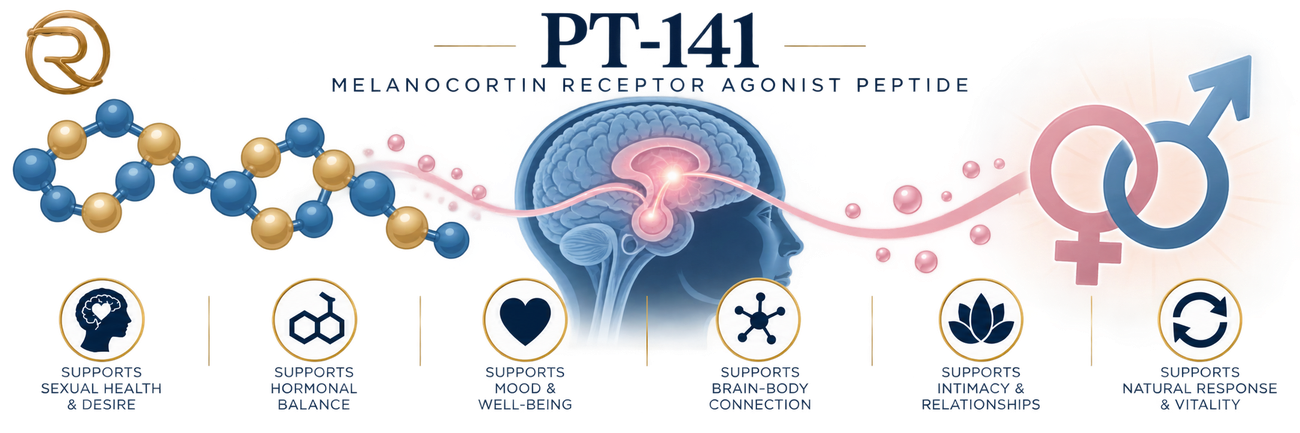
What the studies actually found
As bremelanotide, branded Vyleesi, it's approved specifically for hypoactive sexual desire disorder in premenopausal women. Two Phase 3 trials in 1,267 women showed statistically significant improvement over placebo (P<0.001) — worth knowing: an independent 2021 re-analysis argued the real-world benefit is modest and raised questions about how outcomes were reported, a critique the original researchers have formally disputed.
READ THE RESEARCH →In a 1998 University of Arizona trial of Melanotan-II — a related melanocortin peptide, not PT-141 itself — 8 of 10 men with psychogenic erectile dysfunction developed clinically apparent erections, versus essentially none on placebo (P=0.0045). That unexpected result is what sent researchers looking for a more selective successor molecule.
READ THE RESEARCH →In a randomized crossover study, low-dose intranasal PT-141 combined with sildenafil (Viagra) produced a greater erectile response than sildenafil by itself — genuinely interesting because it suggested the brain-acting melanocortin pathway and the blood-vessel-acting PDE5 pathway could work together rather than compete.
READ THE RESEARCH →In an early 2006 study, 18 premenopausal women with sexual arousal disorder received intranasal bremelanotide or placebo. Researchers measured both physiological response and subjective arousal — evidence that reframed PT-141 from an erection-focused compound into a broader sexual-motivation drug, setting up everything that followed.
READ THE RESEARCH →Sildenafil and similar drugs act on blood vessels. PT-141 instead activates MC4R, a melanocortin receptor concentrated in the hypothalamus and limbic system — the brain circuitry involved in desire itself, not the plumbing downstream of it.
EXPLORE THE SCIENCE →PT-141 — Overview
What Is PT-141?
PT-141 is the research name for bremelanotide, a synthetic peptide designed to interact with the body’s melanocortin system — a family of signaling molecules and receptors involved in pigmentation, energy regulation, appetite, and aspects of sexual behavior.
Unlike many peptides that closely imitate a naturally occurring hormone, PT-141 is an engineered analogue of alpha-melanocyte-stimulating hormone (α-MSH), a peptide produced from the larger precursor protein proopiomelanocortin (POMC). Scientists learned that modifying the structure of melanocortin peptides could produce molecules with different biological properties, including longer activity and altered receptor selectivity. PT-141 emerged from that effort.
Chemically, bremelanotide is a cyclic heptapeptide — a peptide of seven amino-acid residues whose structure is constrained into a ring-like configuration. That structural modification changes how the molecule interacts with melanocortin receptors and contributes to its resistance to rapid enzymatic breakdown compared with the natural hormone that inspired it. FDA records identify PT-141 as a synonym for bremelanotide and describe bremelanotide acetate as the active pharmaceutical substance used in Vyleesi.
The most important distinction between PT-141 and many compounds discussed in the peptide world is that bremelanotide is not merely an experimental research chemical — it became an FDA-approved prescription medicine in the United States in 2019 under the brand name Vyleesi. Its approved use is specifically for premenopausal women with acquired, generalized hypoactive sexual desire disorder (HSDD) — a clinically defined condition involving persistently low sexual desire that causes significant distress or interpersonal difficulty. It is not approved to enhance sexual performance, and its FDA-approved indication does not include men or postmenopausal women.
That regulatory history is part of what makes PT-141 scientifically interesting: a molecule that began as an exploration of the melanocortin system ultimately became a clinically useful example of how manipulating a signaling pathway can influence a complex human behavior.
Scientific Discovery & Development
The story of PT-141 begins well before PT-141 itself existed.
During the mid-twentieth century, researchers began understanding that certain pituitary-derived peptides could influence pigmentation, eventually leading to the identification and characterization of the melanocortin family, including hormones such as α-MSH. Over subsequent decades, researchers discovered that melanocortins were doing much more than controlling pigment production — they were part of a broader signaling network affecting the brain, endocrine function, appetite, energy balance, and behavior.
A major advance came from understanding the melanocortin receptors. Five subtypes — MC1R through MC5R — were eventually identified and characterized, transforming melanocortin research from the study of naturally occurring hormones into a field of molecular drug design. Scientists could now modify peptide structures and test how selectively they interacted with individual receptors.
One particularly important compound was Melanotan II (MT-II), a synthetic cyclic analogue of α-MSH developed in the broader effort to create more potent melanocortin compounds. During animal and human investigations, researchers noticed an unexpected effect: melanocortin activation appeared capable of influencing sexual responses.
That observation changed the direction of the field. Researchers began investigating whether sexual responses could be influenced directly through melanocortin signaling rather than indirectly through the reproductive hormones traditionally associated with sexual function. Studies of MT-II and related compounds produced evidence of erectile and sexual effects in animals and humans, helping establish the idea that melanocortin pathways could participate in sexual physiology.
PT-141 was subsequently developed by Palatin Technologies as a modified analogue of this melanocortin chemistry. Early research showed that the peptide could produce dose-related erectile responses in men and activate neural regions associated with sexual behavior. By the early 2000s, PT-141 had entered human clinical investigation as a potential treatment for sexual dysfunction.
The development path eventually shifted toward female sexual dysfunction, where clinical trials evaluated subcutaneous bremelanotide in women with HSDD. Two pivotal Phase 3 studies provided the evidence supporting regulatory review, and the FDA approved Vyleesi in 2019.
The progression is a useful example of modern peptide drug development: natural hormone → receptor biology → engineered analogue → unexpected biological observation → targeted drug development → clinical testing → regulatory approval.
Why Researchers Are Studying PT-141
The scientific interest in PT-141 comes from a relatively unusual question: can a behavioral and physiological response such as sexual desire be influenced by directly modifying neural signaling rather than primarily changing circulating sex hormones?
Sexual desire is not controlled by a single pathway — it emerges from interactions among the brain, sensory processing, emotional state, endocrine signals, autonomic physiology, and reward systems. The melanocortin system became interesting because researchers found evidence that melanocortin signaling participates in the neural circuitry underlying sexual motivation and arousal. PT-141 provided a way to experimentally activate that system and observe what happened.
Clinical research ultimately demonstrated that bremelanotide could produce statistically significant improvements in measures of sexual desire and reductions in distress associated with low desire in appropriately selected women with HSDD. The effects were clinically meaningful enough to support FDA approval, although the magnitude of benefit in trials was generally described as modest rather than transformative.
The significance extends beyond the treatment itself — PT-141 became a tool for studying how brain-based melanocortin signaling contributes to sexual behavior.
Biological Foundation
To understand PT-141, it helps to think of the melanocortin system as a biological communication network.
The process begins with POMC, a precursor protein processed into several biologically active peptides, including α-MSH. These peptides interact with melanocortin receptors located on different cell types and in different tissues, and the receptors are not interchangeable. MC1R is strongly associated with pigmentation and immune-related signaling, while MC3R and MC4R have important roles in central nervous system regulation, including energy balance and aspects of behavior. MC4R is particularly relevant to the sexual-response research surrounding bremelanotide.
PT-141 essentially provides an externally administered signal that can engage this receptor system. That does not mean the peptide simply “turns on libido” — human sexual desire is considerably more complicated than that. Instead, melanocortin activation appears capable of altering neural processing involved in sexual motivation and responsiveness.
This is also why the peptide is scientifically different from drugs that act primarily by changing blood flow. The original research suggested that melanocortin agonists could influence sexual function through central neural pathways, including regions of the brain involved in sexual behavior.
The precise mechanism through which bremelanotide improves HSDD remains incompletely understood. Even the FDA’s regulatory review notes that although bremelanotide is a melanocortin receptor agonist, the exact mechanism by which it improves HSDD symptoms is unknown. Researchers understand the biological system that PT-141 engages, but the complete chain connecting receptor activation to changes in subjective sexual desire is still being investigated.
What Researchers Are Investigating
The most established area of research is female sexual desire and HSDD. Clinical studies have examined whether melanocortin activation can increase sexual desire while reducing the distress associated with persistently low desire — an important distinction, because HSDD is not simply a measure of how frequently someone wants sexual activity but involves low desire accompanied by meaningful personal distress or interpersonal difficulty.
Earlier research also explored PT-141 in male erectile dysfunction. Human studies demonstrated rapid, dose-dependent erectile responses, supporting the idea that melanocortin pathways participate in male sexual physiology as well. However, those findings did not lead to an FDA-approved indication for erectile dysfunction, and Vyleesi is specifically not indicated for use in men.
Researchers have therefore continued to use bremelanotide and related melanocortin compounds as part of a larger scientific effort to understand how the brain regulates sexual motivation, arousal, and behavioral response. The broader scientific question is particularly interesting because the melanocortin network connects several seemingly different biological functions. Understanding how receptor subtype, brain region, signaling intensity, and individual physiology influence the final response could help scientists design future melanocortin-based therapies with greater selectivity.
Potential Benefits & Biological Significance
The strongest evidence for PT-141 concerns its approved role in premenopausal women with acquired, generalized HSDD. In clinical trials, bremelanotide improved measures of sexual desire and reduced distress related to low desire compared with placebo.
Its significance, however, is broader than those clinical endpoints. PT-141 demonstrated that a synthetic peptide modeled on a naturally occurring hormone could influence a complex behavioral system through melanocortin signaling — strengthening the scientific case that sexual motivation has a measurable neurobiological component that can be pharmacologically modulated.
At the same time, the evidence should be kept in perspective. PT-141 is not a general “sexual enhancement” peptide, and its approved indication is deliberately narrow. The FDA specifically limits Vyleesi’s use to the defined HSDD population and states that it is not indicated to enhance sexual performance. This distinction between biological possibility and demonstrated clinical application is central to understanding the peptide.
Current Research Stage & Future Outlook
PT-141 occupies an unusual position in peptide science because it has already crossed the boundary from experimental molecule to approved medicine. Bremelanotide received its initial U.S. FDA approval in 2019, and current FDA and DailyMed records continue to list Vyleesi (bremelanotide) as an active marketed prescription product for acquired, generalized HSDD in premenopausal women.
That does not mean research has ended. Scientists continue to investigate melanocortin receptors as potential therapeutic targets, including their roles in sexual function, appetite, energy regulation, and other physiological processes. Contemporary research is also examining newer melanocortin agonists with greater receptor selectivity, reflecting an ongoing effort to separate desirable biological effects from unwanted ones.
For PT-141 itself, the most important future scientific questions concern who responds, why they respond, and how melanocortin signaling translates into changes in human sexual motivation — questions that move beyond simply asking whether the peptide works, toward how the nervous system converts a molecular signal into a complex human experience.
Global Research Perspective
The development of PT-141 reflects a scientific story spanning multiple stages of international biomedical research. Early melanocortin biology developed through decades of endocrinology and receptor research, while later work on melanocortin-mediated sexual function involved investigators in neuroscience, reproductive medicine, pharmacology, and clinical medicine.
The clinical development of bremelanotide ultimately involved researchers and institutions across the United States. Clinical investigators including Anita Clayton, Sheryl Kingsberg, and James Simon contributed to the clinical evidence base surrounding bremelanotide and HSDD, while earlier researchers — including Victor Hruby, Michael Hadley, and colleagues at the University of Arizona — helped establish the biological connection between melanocortin receptors and sexual function.
The result is a peptide whose story is larger than a single drug or company. PT-141 represents several decades of progress in understanding how a family of small signaling peptides can influence biological systems far beyond their originally recognized functions.
Why This Matters
PT-141 is scientifically important because its history demonstrates how a seemingly specialized biological pathway can reveal an entirely different dimension of human physiology.
What began with the study of melanocortin hormones and their receptors eventually led researchers to an unexpected discovery: manipulating this signaling system could influence sexual behavior and desire. PT-141 transformed that observation into a clinically validated therapy while simultaneously becoming a window into the neurobiology of sexual motivation.
The most interesting questions now go beyond whether PT-141 can produce an effect. They concern how melanocortin signaling interacts with the brain, why responses differ between individuals, and whether more precise manipulation of this system could produce new therapeutic possibilities. That makes PT-141 more than a peptide associated with sexual function — it is a case study in how molecular biology, neuroscience, peptide engineering, and clinical medicine can converge, providing the foundation for the deeper research and mechanistic questions explored in the tabs that follow.
Disclaimer
PT-141 (bremelanotide) is an FDA-approved prescription medicine in the United States, marketed as Vyleesi, for the treatment of acquired, generalized hypoactive sexual desire disorder in premenopausal women. Its approval does not extend to men, postmenopausal women, or general sexual-performance enhancement.
The information presented in the Regevion Educational Library is intended for educational purposes only and is based on current scientific research and publicly available information. This content is not medical advice and should not be interpreted as a recommendation for use or as a substitute for guidance from a qualified healthcare professional.
References
- Harris JI, Lerner AB. Amino-acid sequence of the α-melanocyte-stimulating hormone. Nature. 1957;179(4561):1346-1347.
- Lerner AB. The discovery of the melanotropins: a history of pituitary endocrinology. Ann N Y Acad Sci. 1993;680:1-12.
- Gantz I, et al. Molecular cloning of a novel melanocortin receptor. J Biol Chem. 1993;268(11):8246-8250 (MC3R); Gantz I, et al. Molecular cloning, expression, and gene localization of a fourth melanocortin receptor. J Biol Chem. 1993;268(20):15174-15179 (MC4R). PMID 8392067.
- Dorr RT, Lines R, Levine N, Brooks C, Xiang L, Hruby VJ, Hadley ME. Evaluation of melanotan-II, a superpotent cyclic melanotropic peptide in a pilot phase-I clinical study. Life Sci. 1996;58(20):1777-1784. PMID 8637402.
- Wessells H, Fuciarelli K, Hansen J, Hadley ME, Hruby VJ, Dorr R, Levine N. Synthetic melanotropic peptide initiates erections in men with psychogenic erectile dysfunction: double-blind, placebo controlled crossover study. J Urol. 1998;160(2):389-393.
- Wessells H, Levine N, Hadley ME, Dorr R, Hruby V. Effect of an alpha-melanocyte stimulating hormone analog on penile erection and sexual desire in men with organic erectile dysfunction. Urology. 2000;56(4):641-646.
- Diamond LE, Earle DC, Rosen RC, Willett MS, Molinoff PB. Double-blind, placebo-controlled evaluation of the safety, pharmacokinetic properties and pharmacodynamic effects of intranasal PT-141, a melanocortin receptor agonist, in healthy men and men with mild-to-moderate erectile dysfunction. Int J Impot Res. 2004;16(1):51-59. PMID 14963471.
- Rosen RC, Diamond LE, Earle DC, Shadiack AM, Molinoff PB. Evaluation of the safety, pharmacokinetics and pharmacodynamic effects of subcutaneously administered PT-141, a melanocortin receptor agonist, in healthy male subjects and in patients with an inadequate response to Viagra. Int J Impot Res. 2004;16(2):135-142.
- Diamond LE, et al. Co-administration of low doses of intranasal PT-141, a melanocortin receptor agonist, and sildenafil to men with erectile dysfunction results in an enhanced erectile response. Urology. 2005. PMID 15833522.
- Diamond LE, Earle DC, Heiman JR, Rosen RC, Perelman MA, Harning R. An effect on the subjective sexual response in premenopausal women with sexual arousal disorder by bremelanotide (PT-141), a melanocortin receptor agonist. J Sex Med. 2006;3(4):628-638.
- Clayton AH, et al. Bremelanotide for female sexual dysfunctions in premenopausal women: a randomized, placebo-controlled dose-finding trial. Women’s Health (Lond). 2016;12(3):325-337. PMID 27181790.
- Kingsberg SA, Clayton AH, Portman D, et al. Bremelanotide for the treatment of hypoactive sexual desire disorder: two randomized phase 3 trials. Obstet Gynecol. 2019;134(5):899-908. PMID 31599840.
- U.S. Food and Drug Administration. Vyleesi (bremelanotide) prescribing information. NDA 210557. Approved June 21, 2019.
PT-141 — The Research
How PT-141 Was Discovered
The scientific story behind PT-141 begins decades before PT-141 itself existed.
In the early-to-mid 1950s, researchers including Aaron Lerner, working with colleagues such as Kazuo Shizume and Thomas Fitzpatrick at Yale, investigated hormones produced by the pituitary gland and their effects on pigmentation, establishing the biological activity of melanocyte-stimulating hormone (MSH). By 1957, J. I. Harris and Aaron Lerner had determined the amino-acid sequence of alpha-MSH. These discoveries established that a small peptide hormone could produce specific biological effects through a defined molecular signal.
The next major step was understanding the receptors that responded to these hormones. During the early 1990s, researchers including Irwin Gantz and Roger Cone helped identify and characterize the melanocortin receptor family, and in 1993 human melanocortin receptors MC3R and MC4R were molecularly cloned. This transformed melanocortin research: scientists could now investigate individual receptor subtypes rather than treating melanocortins simply as hormones associated with pigmentation.
That distinction became particularly important when researchers discovered that melanocortin signaling was involved in much more than skin pigmentation. Work through the 1990s connected melanocortin receptors with energy regulation, appetite, sexual behavior, and other central nervous system functions. MC4R, in particular, emerged as an important receptor in brain signaling and sexual physiology.
Researchers at the University of Arizona, including Victor Hruby, Michael Hadley, Richard Dorr, and Norman Levine, then explored synthetic cyclic melanocortin compounds designed to produce stronger and more selective biological effects. One of these compounds was Melanotan II. A 1996 Phase 1 study showed the compound had powerful melanotropic activity and helped establish the clinical potential of synthetic melanocortin analogs.
An unexpected observation changed the direction of the research. Human studies of Melanotan II demonstrated that melanocortin stimulation could produce erections and influence sexual desire. In 1998, Wessells and colleagues at the University of Arizona reported clinically apparent erections in 8 of 10 men with psychogenic erectile dysfunction following Melanotan II administration, in a double-blind, placebo-controlled crossover study. A follow-up 2000 study found erectile responses in men with organic risk factors as well.
The scientific question was no longer simply whether melanocortins affected pigmentation. Researchers began asking whether the same signaling system could be deliberately targeted to influence sexual function. PT-141, later named bremelanotide, emerged from this research as a redesigned melanocortin analog intended to retain the central sexual effects while moving away from the pigmentation-related profile of earlier compounds.
From Experimental Peptide to Human Medicine
The early research progressed from unexpected observations to controlled human studies.
2004 — PT-141 in Men Study: Double-blind, placebo-controlled evaluation of the safety, pharmacokinetic properties and pharmacodynamic effects of intranasal PT-141 Researchers: Lisa Diamond, Dennis Earle, Raymond Rosen, Michael Willett and colleagues Journal: International Journal of Impotence Research, 2004 Study type: Controlled human pharmacology study
Researchers evaluated intranasal PT-141 in healthy men and men with mild-to-moderate erectile dysfunction, to determine whether the new compound could reproduce the erectile effects observed with earlier melanocortin compounds while establishing its pharmacokinetic and pharmacodynamic profile. PT-141 produced dose-related drug exposure, with a median time to peak concentration of approximately 30 minutes and a measurable erectile response at higher doses (significant at intranasal doses above 7 mg). The key discovery was that melanocortin stimulation could produce a physiological sexual response through a pathway distinct from the nitric-oxide pathway targeted by conventional PDE5 inhibitors.
A second 2004 study, led by Raymond Rosen with Diamond, Earle, Shadiack, and Molinoff, evaluated subcutaneous PT-141 in men, including patients who had responded inadequately to Viagra (sildenafil). Together, these studies established that PT-141 had genuine human pharmacological activity rather than simply reproducing an effect observed in animal models.
Researchers even investigated whether PT-141 could complement sildenafil. In a small randomized crossover study, the combination produced a greater erectile response than sildenafil alone — an interesting finding scientifically, because it suggested melanocortin and PDE5 signaling could influence sexual physiology through partially distinct mechanisms.
However, this early development path did not ultimately lead to FDA approval for erectile dysfunction.
The Research Shifted Toward Female Sexual Dysfunction
The next major question was whether melanocortin signaling could influence sexual desire and arousal in women.
2006 — Early Human Research in Women Study: An Effect on the Subjective Sexual Response in Premenopausal Women with Sexual Arousal Disorder by Bremelanotide (PT-141), a Melanocortin Receptor Agonist Researchers: Lisa Diamond, Dennis Earle, Julia Heiman, Raymond Rosen and colleagues Journal: Journal of Sexual Medicine, 2006 Study type: Randomized, double-blind crossover study (n=18)
Eighteen premenopausal women with female sexual arousal disorder received intranasal bremelanotide or placebo. Researchers measured both physiological responses and participants’ subjective perceptions of sexual arousal and desire. The study provided evidence that PT-141 could influence sexual response in women, helping move the development program toward disorders characterized by low sexual desire rather than erectile dysfunction alone.
This was an important transition in the research story. Scientists were beginning to see PT-141 not simply as an erection-promoting compound, but as a centrally acting melanocortin drug capable of influencing aspects of sexual motivation and response.
The Evidence Became Clinical
The pivotal stage of development came when researchers began testing bremelanotide specifically in women with hypoactive sexual desire disorder (HSDD).
Phase 2b — Finding the Clinically Useful Dose
A Phase 2b dose-ranging trial (Clayton et al., 2016) compared subcutaneous doses of 0.75, 1.25, and 1.75 mg bremelanotide in premenopausal women with HSDD and related sexual dysfunction. Researchers were no longer asking simply whether the compound had an effect — they were trying to determine which dose produced a meaningful balance between benefit and tolerability. The pooled 1.25- and 1.75-mg groups showed significantly greater improvement than placebo. Subsequent responder analyses examined whether changes in patient-reported sexual-function measures were large enough to be considered clinically meaningful rather than merely statistically different from placebo.
This stage helped establish the 1.75 mg subcutaneous dose that became the basis for the pivotal Phase 3 program.
2019 — The Pivotal Phase 3 Trials (RECONNECT Studies) Study: Bremelanotide for the Treatment of Hypoactive Sexual Desire Disorder: Two Randomized Phase 3 Trials Researchers: Sheryl Kingsberg, Anita Clayton, David Portman and colleagues Journal: Obstetrics & Gynecology, 2019 Study type: Two Phase 3 randomized, double-blind, placebo-controlled multicenter trials
The two RECONNECT trials randomized 1,267 premenopausal women with HSDD (1,202 in the efficacy population) across the United States and Canada. Participants received either 1.75 mg subcutaneous bremelanotide or placebo as needed for 24 weeks. The trials demonstrated statistically significant improvements in measures of sexual desire and reductions in distress associated with low desire compared with placebo: the integrated analysis showed an improvement of 0.35 points in the Female Sexual Function Index (FSFI) desire domain and a reduction of 0.33 points in the relevant sexual-distress measure (both p<.001).
The results were important because they moved bremelanotide from experimental melanocortin research into evidence capable of supporting regulatory approval.
At the same time, the magnitude of benefit matters. Later independent re-analyses (Spielmans, 2021 and 2023, published in the Journal of Sex Research) questioned the validity of several outcome measures used in the trials and characterized the observed benefits as statistically significant but modest. That criticism is important because statistical significance does not automatically mean a large or universally meaningful clinical effect.
The overall evidence therefore supports a real treatment effect, but one that should be understood in the context of modest effect sizes and subjective clinical endpoints.
FDA Approval Changed the Status of PT-141
On June 21, 2019, the U.S. Food and Drug Administration approved bremelanotide under the brand name Vyleesi. The approved indication is specifically for premenopausal women with acquired, generalized HSDD when the condition causes clinically significant distress or interpersonal difficulty and is not explained by another medical or psychiatric condition, relationship problems, or medication/substance effects.
This distinction is scientifically important. PT-141 is not an FDA-approved treatment for general sexual enhancement, erectile dysfunction in men, or HSDD in men or postmenopausal women. The regulatory approval applies to a specific patient population and clinical condition.
The FDA’s review also concluded that the precise mechanism by which bremelanotide improves HSDD symptoms was not fully established, even though its activity at melanocortin receptors was well characterized.
What the Human Evidence Shows
Stronger Evidence The strongest evidence for PT-141 is its controlled human research in premenopausal women with acquired, generalized HSDD, culminating in two Phase 3 trials and FDA approval. The evidence supports an improvement in sexual desire and a reduction in distress associated with low desire in the population studied.
Established but More Limited Evidence Earlier human studies demonstrate that melanocortin signaling can influence erectile and sexual responses in men. However, these studies were generally smaller and were not the basis for FDA approval of bremelanotide for male sexual dysfunction.
Emerging Research Post-approval research continues to examine questions that were not fully answered during the original development program. One recent example is a Phase 4 study (NCT06867835) examining bremelanotide concentrations in breast milk after a single dose in lactating premenopausal women. The study enrolled 10 participants and was completed in November 2025.
This illustrates how research changes after approval: the central question is no longer simply “does the drug work?” Researchers can begin investigating specific populations, pharmacokinetic questions, longer-term use, and practical aspects of treatment.
What Researchers Are Studying Now
The modern research story surrounding PT-141 is less about discovering whether melanocortin signaling affects sexual function — it clearly does — and more about understanding where, in whom, and under what circumstances that signaling provides meaningful clinical benefit.
Researchers continue to examine how pharmacological treatments for HSDD compare across mechanisms and how patient-reported outcomes should be measured. A 2026 systematic review of completed pharmacological trials (Frontiers in Medicine) identified bremelanotide and flibanserin as the most extensively studied drug approaches for HSDD, while also highlighting variation in clinical endpoints and outcome reporting.
Future research is therefore likely to be less about proving the basic concept and more about refining patient selection, defining meaningful treatment response, understanding long-term use, and determining how melanocortin-based therapies fit into the broader treatment of sexual dysfunction.
Future Scientific Potential
PT-141 is scientifically interesting because its history demonstrates how an unexpected biological observation can open an entirely new therapeutic pathway.
The original melanocortin research was focused on pigmentation. Receptor discovery revealed a much broader signaling system. Experiments with Melanotan II unexpectedly exposed effects on sexual function. PT-141 then transformed that observation into a clinically tested melanocortin therapy and ultimately an FDA-approved medicine for a defined HSDD population.
What remains scientifically interesting is the complexity behind that response. Sexual desire is influenced by biological, neurological, psychological, relational, and hormonal factors. A peptide acting through a central signaling system cannot be expected to address every cause of reduced desire.
The research therefore leaves an important question for the future: not simply whether melanocortin signaling can influence sexual function, but how precisely that signaling can be used to identify and treat specific biological components of sexual dysfunction.
Why This Matters
The research surrounding PT-141 represents a progression from basic hormone biology → receptor discovery → unexpected human observation → synthetic peptide development → controlled clinical trials → regulatory approval.
Scientists learned that melanocortin signaling reaches far beyond pigmentation and can influence human sexual physiology. Human trials subsequently established that bremelanotide can improve sexual desire and reduce associated distress in a specific population of premenopausal women with HSDD.
At the same time, the evidence illustrates why scientific interpretation matters. The treatment effect demonstrated in clinical trials is meaningful but modest, and the approved indication is considerably narrower than the broad claims sometimes associated with the name PT-141.
The most important discovery is therefore not simply that PT-141 “works.” It is that a previously unexpected biological pathway became sufficiently understood, tested, and validated to become a targeted human therapy — while still leaving important questions about individual response, mechanism, and broader applications for future research.
Disclaimer
PT-141 (bremelanotide) is FDA approved in the United States under the brand name Vyleesi for the treatment of acquired, generalized hypoactive sexual desire disorder (HSDD) in premenopausal women who meet the approved diagnostic criteria. FDA approval applies to the specific indication described above; it does not establish PT-141 as an approved treatment for general sexual enhancement, male erectile dysfunction, or HSDD in men or postmenopausal women.
The information presented in the Regevion Educational Library is intended for educational purposes only and is based on current scientific research and publicly available information. This content is not medical advice and should not be interpreted as a recommendation for use or as a substitute for guidance from a qualified healthcare professional.
References
- Harris JI, Lerner AB. Amino-acid sequence of the α-melanocyte-stimulating hormone. Nature. 1957;179(4561):1346-1347.
- Dorr RT, Lines R, Levine N, Brooks C, Xiang L, Hruby VJ, Hadley ME. Evaluation of melanotan-II, a superpotent cyclic melanotropic peptide in a pilot phase-I clinical study. Life Sci. 1996;58(20):1777-1784. PMID 8637402.
- Wessells H, Fuciarelli K, Hansen J, Hadley ME, Hruby VJ, Dorr R, Levine N. Synthetic melanotropic peptide initiates erections in men with psychogenic erectile dysfunction: double-blind, placebo controlled crossover study. J Urol. 1998;160(2):389-393.
- Wessells H, Levine N, Hadley ME, Dorr R, Hruby V. Effect of an alpha-melanocyte stimulating hormone analog on penile erection and sexual desire in men with organic erectile dysfunction. Urology. 2000;56(4):641-646.
- Diamond LE, Earle DC, Rosen RC, Willett MS, Molinoff PB. Double-blind, placebo-controlled evaluation of the safety, pharmacokinetic properties and pharmacodynamic effects of intranasal PT-141. Int J Impot Res. 2004;16(1):51-59. PMID 14963471.
- Rosen RC, Diamond LE, Earle DC, Shadiack AM, Molinoff PB. Evaluation of the safety, pharmacokinetics and pharmacodynamic effects of subcutaneously administered PT-141. Int J Impot Res. 2004;16(2):135-142.
- Diamond LE, et al. Co-administration of low doses of intranasal PT-141 and sildenafil to men with erectile dysfunction results in an enhanced erectile response. Urology. 2005. PMID 15833522.
- Diamond LE, Earle DC, Heiman JR, Rosen RC, Perelman MA, Harning R. An effect on the subjective sexual response in premenopausal women with sexual arousal disorder by bremelanotide (PT-141). J Sex Med. 2006;3(4):628-638.
- Clayton AH, et al. Bremelanotide for female sexual dysfunctions in premenopausal women: a randomized, placebo-controlled dose-finding trial. Women’s Health (Lond). 2016;12(3):325-337. PMID 27181790.
- Kingsberg SA, Clayton AH, Portman D, et al. Bremelanotide for the treatment of hypoactive sexual desire disorder: two randomized phase 3 trials. Obstet Gynecol. 2019;134(5):899-908. PMID 31599840.
- Spielmans GI. Re-analyzing phase III bremelanotide trials for “hypoactive sexual desire disorder” in women. J Sex Res. 2021;58(9):1089-1097; Spielmans GI. Small effects, questionable outcomes: bremelanotide for hypoactive sexual desire disorder. J Sex Res. 2023;61(4).
- U.S. Food and Drug Administration. Vyleesi (bremelanotide) prescribing information. NDA 210557. Approved June 21, 2019.
- ClinicalTrials.gov. Single Dose of Vyleesi in Lactating Female Subjects to Measure the Concentration of Bremelanotide in Breast Milk. NCT06867835.
- Frontiers in Medicine (2026). Clinical trial evidence on emerging pharmacological therapies for hypoactive sexual desire disorder in women.
PT-141 — The Science
The Biological Architecture
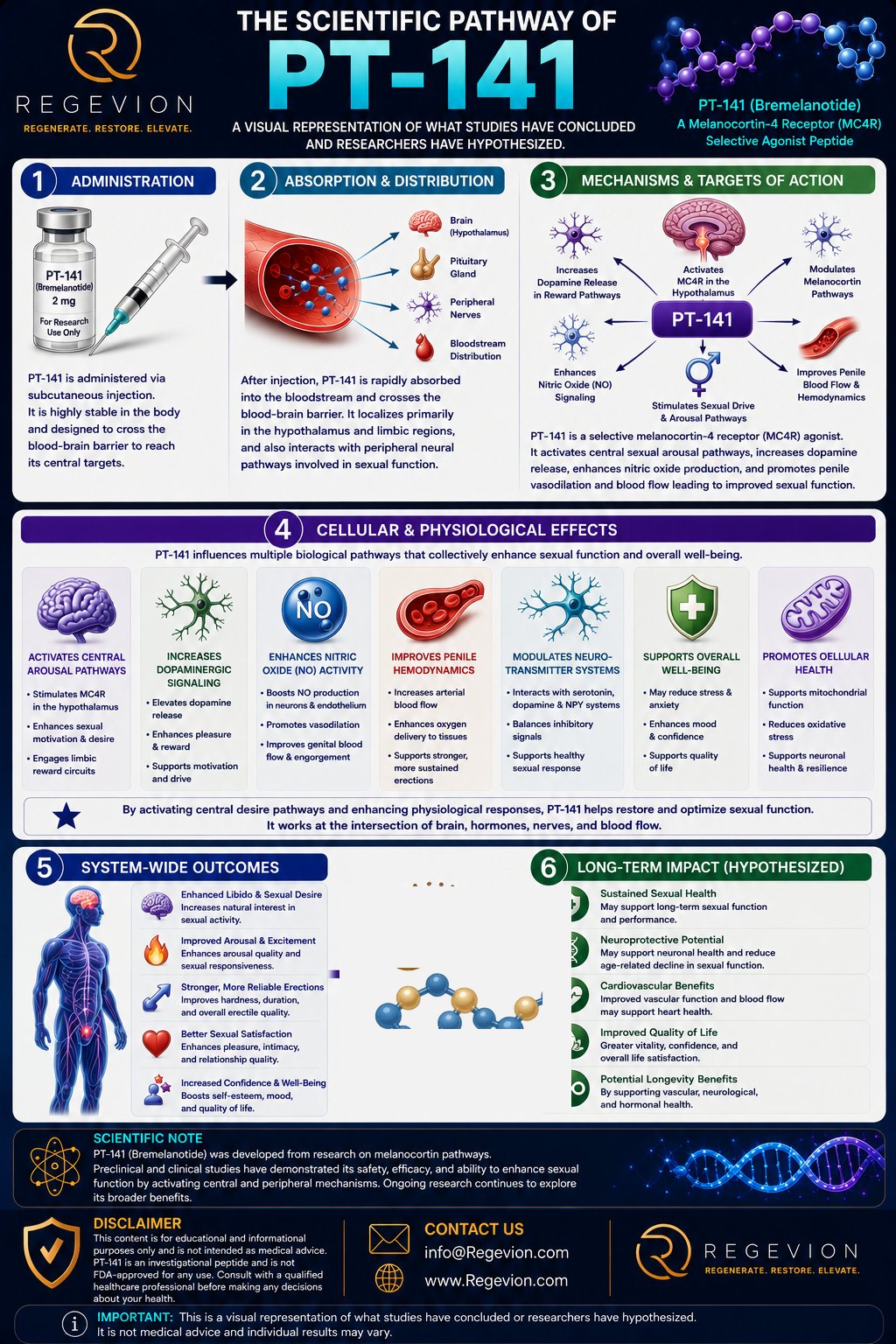
PT-141, scientifically known as bremelanotide, belongs to the melanocortin system — a signaling network built around endogenous peptide hormones derived from proopiomelanocortin (POMC). POMC-derived melanocortins include α-melanocyte-stimulating hormone (α-MSH), which normally acts on a family of melanocortin receptors distributed throughout the body and brain.
Bremelanotide is a synthetic cyclic heptapeptide designed to mimic melanocortin signaling. Rather than acting primarily through sex hormones or the vascular nitric-oxide pathway targeted by drugs such as PDE5 inhibitors, its central biological target is the melanocortin receptor system, particularly MC4R in the central nervous system.
The basic biological sequence is: bremelanotide → melanocortin receptor → neuronal signaling → altered neural excitability and neurotransmitter release → changes in sexual motivation and arousal-related physiology.
Melanocortin receptors are G-protein-coupled receptors (GPCRs), meaning receptor activation does not directly produce a physiological effect — instead, it changes intracellular signaling inside the cell, which then modifies neuronal activity and communication with other neural circuits.
Bremelanotide is not perfectly selective. FDA pharmacology data show an order of receptor potency of MC1R > MC4R > MC3R > MC5R > MC2R, with MC1R and MC4R being particularly relevant at therapeutic exposure. That receptor profile matters because the biological consequences of stimulating different melanocortin receptors are not identical.
Molecular Mechanism of Action
After subcutaneous administration, bremelanotide enters systemic circulation and reaches tissues expressing melanocortin receptors. Within the brain, MC4R-expressing neurons are distributed across several regions involved in autonomic regulation, motivation, energy balance, and sexual behavior.
At the receptor level, bremelanotide functions as an agonist: it binds to melanocortin receptors and stabilizes an active signaling state. MC4R’s best-characterized signaling route involves Gs-mediated activation of adenylyl cyclase, increasing the intracellular second messenger cyclic AMP (cAMP), which can then activate protein kinase A and influence phosphorylation of intracellular proteins, neuronal excitability, and downstream signaling.
MC4R signaling is more complicated than a single linear pathway, however. Research indicates the receptor can also engage alternative G-protein pathways and β-arrestin-associated signaling, with the relative contribution of these pathways depending on the cellular environment, receptor-associated proteins, and the ligand involved. This matters because the ultimate biological response is determined not simply by whether MC4R is “on,” but where it is activated, which signaling machinery is available in that cell, and what neural circuit the cell belongs to.
For bremelanotide, the precise molecular sequence leading to improvement in human HSDD remains incompletely defined — the FDA specifically states that the mechanism by which Vyleesi improves HSDD is unknown. The strongest mechanistic model therefore proceeds from receptor pharmacology into neural-circuit biology rather than claiming a single proven molecular pathway.
MC4R, the Hypothalamus & Sexual Motivation
One of the most important regions in the proposed mechanism is the medial preoptic area (mPOA) of the hypothalamus — a highly conserved neural region involved in sexual motivation and behavior. Animal research has demonstrated that melanocortin signaling within this region can influence sexual behavior, while dopamine signaling in the mPOA is strongly associated with sexual motivation.
Preclinical work with bremelanotide provides an important bridge between these systems: peripheral administration has been shown to activate the mPOA and other hypothalamic and limbic regions involved in sexual behavior, with one proposed mechanism being activation of MC4R-containing neurons that influence dopaminergic signaling within the mPOA.
The conceptual pathway is therefore: bremelanotide → MC4R activation in relevant neural circuits → altered intracellular signaling within MC4R-expressing neurons → changes in downstream neuronal activity and neurotransmitter release → increased activity within excitatory sexual-motivation circuitry → changes in subjective sexual desire and related aspects of sexual response.
The dopamine component is biologically plausible but should not be overstated. Dopamine is an important regulator of sexual motivation, but evidence that bremelanotide’s human therapeutic effect is caused specifically by a particular dopamine pathway remains incomplete. A 2025 animal study in female Syrian hamsters directly challenged the idea that bremelanotide primarily acts by enhancing reward through the classic ventral tegmental area–nucleus accumbens (VTA-NAc) pathway, concluding that bremelanotide does not act on the VTA-NAc reward circuit and does not enhance the rewarding effects of sexual interactions. This is an important distinction between a strongly supported mechanistic model and an established human mechanism.
Receptor Biology Beyond MC4R
MC4R — the central mechanistic receptor. MC4R is expressed extensively in the central nervous system and participates in several physiological processes. In the context of bremelanotide, it is the melanocortin receptor most closely associated with the proposed neural mechanism of sexual motivation.
MC1R — a major peripheral pharmacological target. MC1R is expressed on melanocytes, the pigment-producing cells of the skin. Activating this receptor increases melanogenic signaling, helping explain why bremelanotide can produce pigmentation changes at sufficient exposure. This illustrates an important pharmacological principle: a drug does not necessarily produce only its intended biological effect at every receptor it can activate. Bremelanotide’s receptor profile creates both its therapeutic pharmacology and some of its peripheral pharmacological effects.
MC3R, MC5R, and MC2R are also activated to varying degrees, but their contribution to the therapeutic response at approved exposure remains less clearly defined.
Pharmacology: Potency Is Not the Same as Selectivity
Bremelanotide is a nonselective melanocortin receptor agonist. Its potency differs across receptor subtypes, meaning the concentration required to activate one receptor can differ from that required for another. This creates an important relationship between exposure and receptor recruitment: at lower exposure, the biological response may be dominated by the receptors most readily activated, while at higher exposure, receptors with lower functional sensitivity may experience greater activation as well. Consequently, increasing dose does not necessarily produce a simple proportional increase in one desired effect. For bremelanotide, this is especially relevant because MC4R and MC1R have different physiological roles — greater exposure can therefore increase melanocortin signaling outside the neural pathway of interest.
Pharmacokinetics: What Happens to Bremelanotide?
Following subcutaneous administration, bremelanotide is rapidly absorbed, with a median time to maximum plasma concentration of approximately 1 hour and absolute subcutaneous bioavailability of approximately 100%. The FDA label reports a mean volume of distribution of approximately 25 L (±5.8 L), with about 21% plasma-protein binding.
Its mean terminal half-life is approximately 2.7 hours (range 1.9–4.0 hours). The peptide is primarily metabolized through hydrolysis of the amide bonds within its cyclic peptide structure, and radiolabeled material is recovered predominantly in urine (~64.8%), with a smaller proportion in feces (~22.8%).
The pharmacokinetic sequence is therefore: subcutaneous administration → rapid systemic absorption → peak exposure at ~1 hour → receptor interaction → declining plasma concentration → peptide hydrolysis and elimination. The relatively short plasma half-life helps explain why bremelanotide is used as an on-demand rather than continuously administered therapy.
Importantly, plasma half-life and biological effect are not identical concepts — a receptor-mediated physiological response can persist after circulating concentrations begin to decline, because downstream cellular and neural signaling does not necessarily switch off at the exact moment plasma drug concentration falls.
Organ function can also affect exposure: renal impairment increases exposure (roughly 1.2× in mild, 1.5× in moderate, and 2× in severe impairment), and hepatic impairment increases exposure as well (roughly 1.2× in mild and 1.7× in moderate impairment) — though severe hepatic impairment has not been studied, so its effect on exposure is not established.
Dose, Exposure & Dose-Response
Human dose-finding research evaluated subcutaneous doses of 0.75, 1.25, and 1.75 mg in premenopausal women with sexual dysfunction. In a randomized dose-finding study, the pooled 1.25- and 1.75-mg groups showed greater improvement in validated measures than placebo, supporting a dose-response relationship within the studied range and forming the basis for carrying the 1.75-mg dose into Phase 3.
The FDA-approved regimen is 1.75 mg subcutaneously as needed, administered at least 45 minutes before anticipated sexual activity, with labeling specifying no more than one dose within 24 hours and no more than eight doses per month.
The pharmacokinetics become particularly informative at higher experimental exposures. Across approximately 0.3–10 mg, plasma exposure increased less than proportionally, with mean Cmax plateauing around 7.5 mg — roughly 4.3 times the approved maximum single dose. This is an example of why higher dose does not equal proportionally higher biological effect: as exposure rises, receptor systems and pharmacokinetic processes can approach saturation, while stimulation of additional melanocortin receptors can become increasingly relevant. Higher doses also produce more pronounced pharmacodynamic effects, including greater likelihood of nausea, pigmentation changes, and blood-pressure effects.
Lower vs. Higher Exposure
At lower therapeutic exposure, the pharmacological objective is to achieve sufficient melanocortin signaling to influence the relevant neural circuitry without unnecessarily increasing activation of peripheral melanocortin receptors.
At moderate therapeutic exposure, MC4R-mediated signaling is more robust, increasing the probability that downstream neural circuitry will be sufficiently modulated to produce a measurable effect.
At higher exposure, receptor stimulation does not simply continue producing proportionally greater therapeutic benefit — plasma concentration becomes less dose-proportional, and peripheral melanocortin effects become more prominent, as illustrated by the plateau in Cmax at substantially higher doses.
The pharmacological principle is therefore: dose → systemic exposure → receptor engagement → neural signaling → physiological response, with each step capable of introducing nonlinear behavior.
Does Body Weight Determine Dose?
Bremelanotide’s approved regimen is fixed-dose rather than weight-based — the FDA labeling specifies 1.75 mg per administration rather than a dose calculated in milligrams per kilogram. This is important because a drug can have pharmacokinetic differences between individuals without requiring weight-based dosing. For bremelanotide, the clinical dosing strategy was established around a fixed subcutaneous dose, not an individualized calculation based solely on body mass.
As noted above, renal and hepatic function can affect exposure. Body weight, however, should not be treated as a surrogate for exposure or as a reason to independently calculate a larger or smaller dose.
Connecting the Mechanism to Human Outcomes
The biological chain is best understood as: bremelanotide → melanocortin receptor activation → intracellular GPCR signaling → altered neuronal activity → modulation of hypothalamic and related sexual-motivation circuits → changes in neurotransmitter signaling → changes in sexual desire and associated distress.
Clinical trials demonstrated statistically significant improvements in validated measures of sexual desire and reductions in distress related to low desire in premenopausal women with acquired, generalized HSDD. The mechanism should nevertheless be interpreted carefully: the clinical effect is established, while the exact neural circuitry translating MC4R activation into the human therapeutic response remains incompletely resolved. This distinction is central to understanding modern pharmacology — a drug can have a demonstrated clinical effect even while scientists continue refining the precise molecular explanation for that effect.
Combination & Pathway Interaction
Bremelanotide operates within a biological environment already influenced by neurotransmitters and hormones. Sexual desire is not controlled by a single receptor or neurotransmitter; dopaminergic, serotonergic, noradrenergic, hormonal, autonomic, and psychological processes interact across multiple brain regions. Bremelanotide should therefore be viewed as a modulator of an existing biological network, rather than as an isolated “on switch” for sexual desire.
Its pharmacology can also influence other physiological systems — the FDA label reports transient increases in blood pressure (up to ~6 mmHg systolic / ~3 mmHg diastolic) and reductions in heart rate (up to ~5 bpm), peaking 2–4 hours post-dose and resolving by about 12 hours, reflecting melanocortin-system activity outside the specific neural circuitry associated with sexual motivation.
Interaction with other medications can also occur indirectly through slowed gastric emptying, which may alter absorption of some orally administered drugs. These interactions illustrate why pathway-level pharmacology matters: the biological effects of a receptor agonist extend beyond the single outcome for which it was developed.
What Scientists Still Do Not Fully Understand
The most important unanswered question is remarkably specific: which MC4R-expressing neural circuits are necessary and sufficient for bremelanotide’s therapeutic effect in humans?
Animal research points toward the hypothalamus and dopaminergic signaling, but newer work suggests that some previously proposed reward-circuit explanations may be incomplete. Scientists also continue to investigate how MC4R signaling differs between tissues, how receptor-associated proteins influence signaling, and how multiple intracellular pathways combine to generate different physiological outcomes — MC4R is now understood to be considerably more complex than a simple single-pathway receptor.
The unresolved biology is therefore not whether bremelanotide interacts with melanocortin receptors — it clearly does — but how that receptor activity is translated through specific human neural circuits into the subjective and behavioral dimensions of sexual desire.
Why This Matters
PT-141 demonstrates how a small peptide can influence physiology through a surprisingly sophisticated chain of events. Molecular biology begins with bremelanotide binding melanocortin receptors. Cellular signaling converts receptor activation into intracellular signals such as cAMP and changes in neuronal activity. Neural circuitry translates those signals through hypothalamic and related networks involved in motivation and sexual behavior. Whole-body physiology then reflects the combined activity of those neural and peripheral melanocortin systems.
The significance of bremelanotide is therefore not simply that it can influence sexual desire. It demonstrates how manipulating a defined neuropeptide receptor system can alter complex human behavior and physiology — and how much of that process can still remain scientifically unresolved even after a therapeutic effect has been demonstrated.
Disclaimer
Bremelanotide (PT-141) is FDA approved under the brand name Vyleesi for the treatment of acquired, generalized hypoactive sexual desire disorder (HSDD) in premenopausal women, within the FDA-approved indication and limitations of use. It is not FDA approved for HSDD in men or postmenopausal women, or for enhancing sexual performance.
The information presented in the Regevion Educational Library is intended for educational purposes only and is based on current scientific research and publicly available information. This content is not medical advice and should not be interpreted as a recommendation for use or as a substitute for guidance from a qualified healthcare professional.
References
- U.S. Food and Drug Administration. Vyleesi (bremelanotide) prescribing information — Clinical Pharmacology section (receptor potency order, pharmacokinetics, drug interactions, hemodynamic effects). NDA 210557.
- Diamond LE, Earle DC, Rosen RC, Willett MS, Molinoff PB. Double-blind, placebo-controlled evaluation of the safety, pharmacokinetic properties and pharmacodynamic effects of intranasal PT-141 in healthy men and men with mild-to-moderate erectile dysfunction. Int J Impot Res. 2004;16(1):51-59. PMID 14963471.
- Kingsberg SA, Clayton AH, Portman D, et al. Bremelanotide for the treatment of hypoactive sexual desire disorder: two randomized phase 3 trials. Obstet Gynecol. 2019;134(5):899-908. PMID 31599840.
- Guarraci FA, et al. Bremelanotide does not act on the ventral tegmental area–nucleus accumbens reward circuit to enhance the rewarding effects of sexual interactions. Neuropharmacology. 2025. PMID 39793696.
- Clayton AH, et al. Bremelanotide for female sexual dysfunctions in premenopausal women: a randomized, placebo-controlled dose-finding trial. Women’s Health (Lond). 2016;12(3):325-337. PMID 27181790.